
Pope Leo XIV Encyclical Calls for AI Regulation to Protect Human Dignity
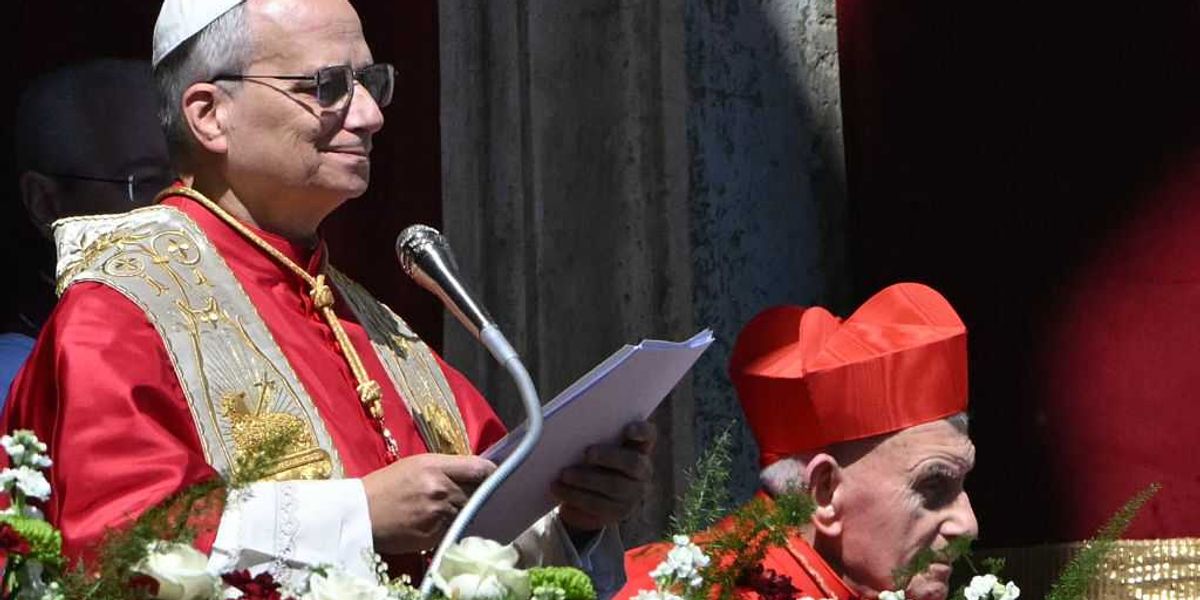
Cover image from theblaze.com, which was analyzed for this article
Pope Leo XIV released a major 42,000-word document urging governments to regulate AI, protect workers and children, and ensure humans retain decision-making authority including on weapons. The statement drew input from AI leaders and commentary across the spectrum.
PoliticalOS
Wednesday, May 27, 2026 — Tech
The encyclical supplies moral principles rather than detailed policy prescriptions, urging that AI development remain subordinate to human dignity and that governments retain authority over high-stakes decisions. Its reception has been shaped more by each outlet’s existing framing of technology and politics than by new facts in the text itself.
What outlets missed
The encyclical explicitly connects AI governance to earlier Vatican initiatives, including the 2020 Rome Call for AI Ethics signed by Microsoft, IBM and others, and Pope Francis’s G-7 remarks on lethal autonomous weapons. Multiple outlets omitted the document’s repeated emphasis on subsidiarity and the need for decisions to be made at the most local effective level rather than through centralized global mandates. The text also contains an extended section on the moral status of truth in democratic life that received little attention outside the primary document itself.
Pope Leo XIV Challenges Silicon Valley Vision for an AI-Driven Economy
Pope Leo XIV released his first encyclical on Monday, a 42,000-word document that places the Catholic Church’s long-standing emphasis on the dignity of labor at the center of debates over artificial intelligence. Titled Magnifica Humanitas in Latin, the text warns that rapid AI adoption risks creating new forms of exclusion by treating work as a dispensable cost rather than a fundamental human activity.
The encyclical draws explicit parallels to Pope Leo XIII’s 1891 letter Rerum Novarum, which addressed worker conditions during the industrial era. Leo XIV argues that AI presents a comparable disruption, one that could sideline large portions of the population from meaningful economic participation. He describes work not merely as a source of income but as a means of personal development, social connection, and contribution to the common good. Removing that role, the pope writes, would compound existing inequalities of wealth with a deeper inequality of purpose and belonging.
This framing arrives as American technology companies accelerate AI deployment with minimal regulatory constraints. The Trump administration has prioritized speed over safety rules, with Vice President J.D. Vance stating at a recent Paris summit that the future will not be won through excessive caution. The Vatican document counters that approach by insisting governments and companies retain obligations to protect workers and communities during technological transitions.
Silicon Valley leaders have often presented AI-driven job displacement as a form of liberation, freeing people from routine labor. Leo XIV rejects that premise, noting that labor’s value extends beyond productivity metrics. His text highlights how concentrated control over AI systems could reinforce the power of a small number of firms and executives, echoing earlier church critiques of unchecked market forces.
The encyclical also touches on broader questions of human agency in an automated age. It contrasts the “new Tower of Babel” created by unchecked technological ambition with a vision of society oriented toward shared flourishing. While the document does not call for halting AI development, it urges ethical guardrails that prioritize human dignity over efficiency gains alone.
Reactions have varied across political lines. Progressive commentators have welcomed the focus on labor rights and inequality, while some conservative outlets questioned whether the church possesses the technical expertise to guide AI policy. Within the industry itself, engagement with religious institutions has grown in recent years, with firms such as Anthropic consulting Catholic thinkers on questions of alignment and purpose.
The timing of the encyclical underscores a widening gap between the Vatican’s perspective and the deregulatory stance dominant in Washington. As AI systems become more capable, the pope’s intervention frames the central choice not as growth versus stagnation but as whether technological change will expand or narrow the circle of people who can contribute to economic and social life.
You just read Liberal's take. Want to read what actually happened?
More in Technology
Trump Pushes Community Dividends to Ease Data Center Backlash
Trump suggested tech companies pay local communities a 'dividend' to gain support for massive AI data centers amid growing backlash over energy use and infrastructure.
Musk Pledges One SpaceX Share to Every U.S. Child
Musk announced plans to distribute one SpaceX share to each of roughly 73 million American children next year, drawing praise from Trump and signaling closer alignment between the two.

Trump Administration Bans DeepSeek AI From Federal Civilian Agencies
Tech stocks rebounded on AI optimism while hyperscalers and firms navigate data center infrastructure, earnings focus, and regulatory scrutiny including bans on certain Chinese AI tools.

Musk Says He Will Give One SpaceX Share to Every US Child
Elon Musk announced plans to distribute one SpaceX share to every American child in 2027, with hints of further giveaways. The pledge drew coverage across outlets amid broader discussions of AI philanthropy and Musk entities.
The Compass
You just read five takes on one story.
What's your take? Find your political shape in a few minutes.
Take the test