
GOP Amasses Cash Edge for 2026 Midterms Amid Enthusiasm Warnings
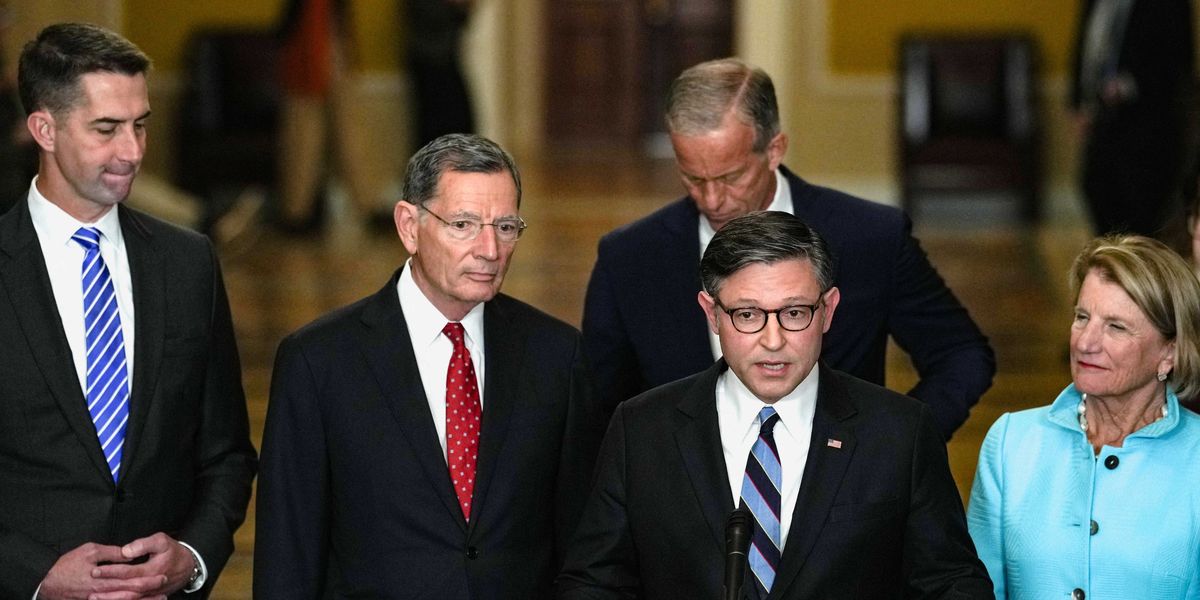
Cover image from rawstory.com, which was analyzed for this article
GOP fundraising dwarfs Democrats as 2026 midterms loom, with Republicans crafting a winning message despite left warnings that Trump drags the party down. Analysts note Trump's picks may not mobilize voters. Primaries provide early indicators of the landscape.
PoliticalOS
Tuesday, May 5, 2026 — Politics
Republicans hold a verified, substantial financial advantage heading into the 2026 midterms that could reshape the playing field months ahead of Election Day. At the same time, early primary data and warnings from GOP pollsters point to an enthusiasm gap among moderate Republicans and signs that Trump's endorsements are less potent than in previous cycles. The decisive factor will be whether the party converts its resources into a message that mobilizes its full coalition or whether dissatisfaction with the administration's direction keeps enough voters home to defy the cash edge.
What outlets missed
Most coverage omitted the precise 23 percent primary win rate for Trump-backed challengers as of April 2026 tracked by Ballotpedia, which places current results in the range of typical anti-incumbent efforts rather than a historic collapse. Outlets on both sides underplayed the full scope of Democratic strength in individual Senate race fundraising, where candidates like Georgia's Jon Ossoff reported $14 million in the first quarter against far less for their Republican opponents. Coverage also gave short shrift to Anderson's day job running Echelon Insights, a firm ranked highly for polling accuracy with Republican clients; her warnings function as strategic advice for GOP improvement rather than neutral prediction of defeat. Finally, few pieces noted that small-dollar online fundraising continues to favor Democrats via platforms like ActBlue, which reported $568 million in the first quarter, a metric that fuels turnout infrastructure beyond committee cash totals.
Republicans enter the 2026 midterm cycle with a financial advantage that dwarfs their opponents, amassing resources that could define battlegrounds and protect incumbents long before voters cast ballots. The stakes are clear: a party controlling the White House and both chambers of Congress typically loses ground in midterms. This time, early fundraising totals exceed $850 million when including super PACs and allied groups, according to Federal Election Commission data compiled by the Washington Examiner. Yet that war chest collides with a central tension: whether sufficient Republican voters will show up, or if dissatisfaction among moderates will blunt the advantage.
The numbers are stark. The National Republican Congressional Committee raised $47.1 million in the first quarter and held $78.2 million in cash on hand, compared with the Democratic Congressional Campaign Committee's $45.3 million raised and $69.9 million cash, per the same reports. In the Senate, the NRSC led the DSCC in March fundraising, $15.6 million to $12.4 million, and maintained a $43 million to $36.5 million cash edge. The Republican National Committee reported $116.7 million cash on hand with zero debt against the DNC's $13.9 million and $18.3 million in liabilities. Outside groups widened the gap further. Republican-aligned super PACs held roughly $257 million more than Democratic counterparts, with President Trump's MAGA Inc. adding another $350 million.
This money follows power, Republican strategist Dennis Lennox told the Washington Examiner. Donors seek access and influence with the governing party. Democratic National Committee member Clay Middleton agreed the disparity reflects Republican control of Washington but emphasized that small-dollar grassroots donors still favor Democrats and drive turnout operations.
Parallel to the cash buildup, early primary contests this month are testing Trump's sway. A Politico investigation found several Trump-endorsed challengers to Republican incumbents struggling to gain traction in Indiana, Kentucky, Louisiana, Alabama and Georgia. In Kentucky, Rep. Thomas Massie led his Trump-backed opponent in polls, fundraising and name recognition. One survey showed half the district's voters preferred an independent-minded lawmaker over a strong Trump supporter. Texas Republicans appeared poised to back Attorney General Ken Paxton over Sen. John Cornyn despite expected Trump intervention. A GOP operative working on the Alabama Senate race said the endorsement "just isn't moving voters." Former Rep. Adam Kinzinger described the moment as the "backside of that power curve."
These signals arrive alongside internal Republican warnings about voter motivation. In a New York Times opinion piece, longtime GOP pollster Kristen Soltis Anderson described an enthusiasm gap between "Trump-first" Republicans and "normie" or party-first Republicans who do not identify with the MAGA movement. She reported that only 49 percent of the latter group described themselves as extremely motivated to vote, compared with 62 percent of the former. Anderson noted declining favorability toward Trump among broader Republicans and skepticism on the economy, health care, foreign policy and the Iran conflict. Some specific polling breakdowns reported in secondary coverage, including exact strong-approval figures on the economy or Iran operations, could not be independently verified in Anderson's published op-ed.
Democrats, for their part, debate messaging. Some favor a pure anti-Trump approach. Others, including Rep. Debbie Dingell of Michigan, argue the party must offer positive alternatives on policy. Republicans are coalescing around contrasts: crediting deregulation for economic gains, promising national standards for civic education, and framing the Iran military campaign as a demonstration of resolve against the Biden administration's Afghanistan withdrawal. Polls have shown majority support for deporting criminal undocumented immigrants, though broader approval of the president's overall performance has slipped into the mid-30s amid rising gas prices and the Iran conflict.
The environment is not good for us, one anonymous GOP strategist acknowledged, but the financial resources provide a buffer. NRCC spokesman Mike Marinella said the early money allows Republicans to expand the map and put Democrats on defense. RNC Chairman Joe Gruters warned against complacency. The outcome, multiple voices across outlets agreed, will depend less on dollars than on whether the party's message reconnects with voters who feel unsettled by the current direction. Primaries this spring and summer will deliver the first quantitative answers.
More in Politics

Federal Agents Search Omar Home in Ongoing Immigration Probe
Homeland Security agents searched the Minnesota Democrat's DC residence in a criminal probe, prompting accusations of political intimidation from Omar and Democratic leaders. Coverage spans left-leaning outlets like NPR, BBC, and The Guardian alongside right-leaning criticism from The Federalist and Daily Wire.

Trump Diesel Import Plan Draws Pushback Over Russia Ties
The weekend agreement drew bipartisan congressional pushback and criticism from Ukraine's Zelenskyy, with analysts downplaying US fuel price impacts. Right-leaning outlets like National Review, Dispatch, and Washington Examiner questioned its legality and effectiveness.

Independents Test Voter Appetite for Middle Ground in 2026 Midterms
Nearly 200 independents are running in competitive races as voters weigh ballot measures on housing costs in states like Massachusetts. Left-leaning coverage from NYT, NPR, and Guardian highlights turnout and key races while right outlets focus on GOP strategy.
Trump Rallies in Alaska, Ohio to Bolster GOP Senate Candidates
The president rallied in Wasilla for Sen. Dan Sullivan and faced empty seats at an Ohio event amid midterm concerns. Outlets across the spectrum covered the trips as signals of GOP vulnerability weeks before Election Day.
The Compass
You just read five takes on one story.
What's your take? Find your political shape in a few minutes.
Take the test