
San Diego Mosque Attack Kills Three Who Tried to Stop Gunmen

Cover image from nypost.com, which was analyzed for this article
Three people were killed in an attack on an Islamic center in San Diego, with a security guard hailed as a hero. Coverage focused on rising anti-Muslim sentiment and the victims' stories.
PoliticalOS
Tuesday, May 19, 2026 — Politics
The three victims died while attempting to shield children and alert authorities during an attack by two teenagers who met online and later died by suicide. Official accounts describe the incident as a hate crime whose full motive and target selection remain under active investigation.
What outlets missed
Most coverage omitted specific physical evidence recovered at the scene, including a Sonnenrad patch and SS bolts drawn on equipment, which investigators linked to neo-Nazi iconography and which could not be independently verified across all reports. Details on the 75-page manifesto’s references to Sharia law concerns and local fraud claims appeared in only one outlet and lacked corroboration from official statements. The exact sequence of how the security guard’s actions directly saved the children was described in varying levels of detail, leaving some accounts without a clear timeline of the lockdown.
Three men died at the Islamic Center of San Diego on May 18, 2026, after they moved to block two armed teenagers who opened fire near a school holding 140 children. The deaths turned a potential wider massacre into a contained incident that ended when the attackers took their own lives. Police and mosque officials described the men’s actions as the reason the toll stayed at three.
San Diego Police Chief Scott Wahl said the victims died while trying to stop the gunmen. Imam Taha Hassane identified them as Mansour Kaziha, 78, a longtime mosque employee; Nader Awad, 57, who lived across the street and attended daily prayers; and Amin Abdullah, 51, the security guard. Abdullah warned school staff to lock down before he was shot, according to statements from mosque leaders. Wahl credited Abdullah with preventing greater loss of life.
The two attackers, identified in multiple reports as 17-year-old Cain Clark and 18-year-old Caleb Vazquez, met online and had been the subject of a police search after one mother reported her son missing and possibly suicidal. Officers were already in the area when the shooting began. Both died of self-inflicted gunshot wounds near the mosque. Investigators recovered 30 firearms, a crossbow, tactical gear, and electronics from two residences. A manifesto attributed to the pair expressed hatred toward multiple groups, and authorities described the attack as a hate crime under investigation.
FBI Special Agent Mark Remily stated that the subjects “did not discriminate on who they hated” and that it remained unclear whether the Islamic Center was the sole target. One attacker had been enrolled in a virtual academy in the San Diego Unified School District and was scheduled to graduate this year. Five nearby public schools went into lockdown during the incident.
Mosque officials and family members described the victims’ roles in the community. Kaziha had worked at the center since its construction in the 1980s, running the gift shop and preparing meals during Ramadan. Awad left his home when he heard gunfire to help and divert others. Abdullah, a father of eight who converted to Islam in the 1990s, greeted visitors daily and took his security duties seriously enough to skip meals on shift, his daughter told reporters.
The attack occurred while officers were already searching for one of the teenagers. The mother of the 17-year-old had alerted police shortly before the shooting. Firearms used in the attack were registered to a parent, though how the pair obtained them remains under investigation. The FBI has opened a tip line for additional information.
More in Politics

Federal Agents Search Omar Home in Ongoing Immigration Probe
Homeland Security agents searched the Minnesota Democrat's DC residence in a criminal probe, prompting accusations of political intimidation from Omar and Democratic leaders. Coverage spans left-leaning outlets like NPR, BBC, and The Guardian alongside right-leaning criticism from The Federalist and Daily Wire.

Trump Diesel Import Plan Draws Pushback Over Russia Ties
The weekend agreement drew bipartisan congressional pushback and criticism from Ukraine's Zelenskyy, with analysts downplaying US fuel price impacts. Right-leaning outlets like National Review, Dispatch, and Washington Examiner questioned its legality and effectiveness.

Independents Test Voter Appetite for Middle Ground in 2026 Midterms
Nearly 200 independents are running in competitive races as voters weigh ballot measures on housing costs in states like Massachusetts. Left-leaning coverage from NYT, NPR, and Guardian highlights turnout and key races while right outlets focus on GOP strategy.
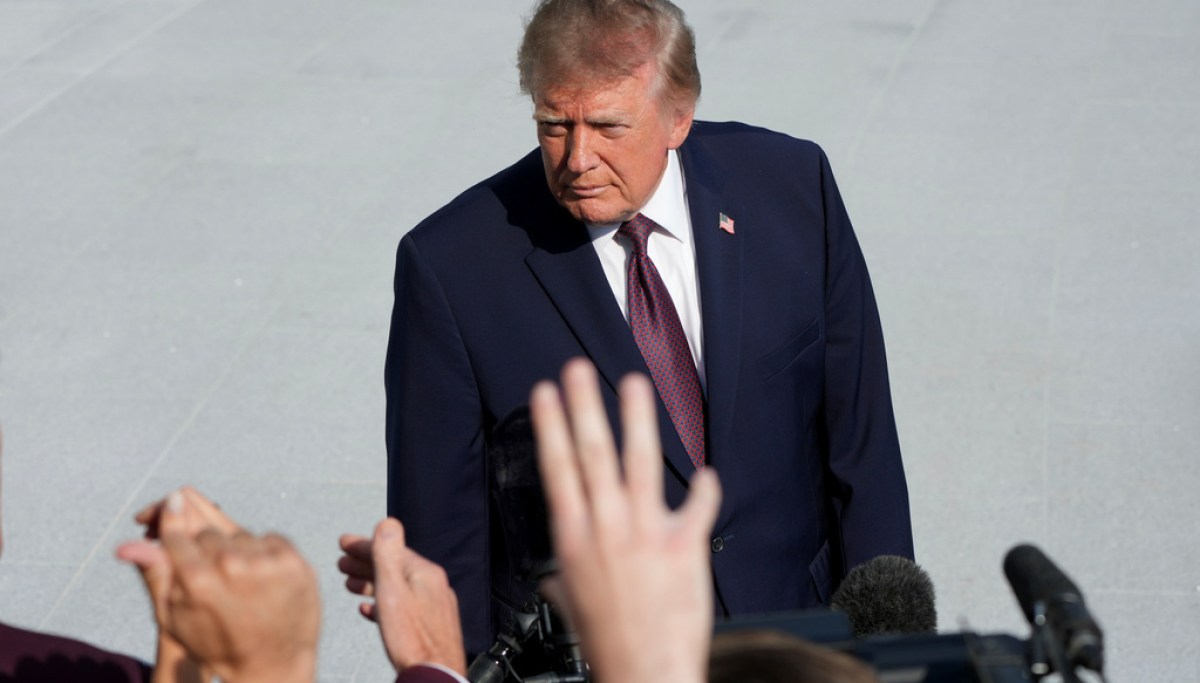
Trump Rallies in Alaska, Ohio to Bolster GOP Senate Candidates
The president rallied in Wasilla for Sen. Dan Sullivan and faced empty seats at an Ohio event amid midterm concerns. Outlets across the spectrum covered the trips as signals of GOP vulnerability weeks before Election Day.
The Compass
You just read five takes on one story.
What's your take? Find your political shape in a few minutes.
Take the test