
Supreme Court Keeps Telehealth Abortion Access Intact for Now

Cover image from slate.com, which was analyzed for this article
A Supreme Court dissent signals potential future challenges to state abortion restrictions. Advocates on both sides prepare for ongoing legal battles.
PoliticalOS
Saturday, May 16, 2026 — Politics
The Court has kept telehealth mifepristone access available during ongoing litigation, but the dissents and pending FDA review indicate that statutory and regulatory disputes will continue. Readers should track both the lower-court proceedings and any changes in agency enforcement policy rather than treating the current stay as a final resolution.
What outlets missed
Neither outlet quoted the precise language of the 1873 Comstock Act or the 2022 DOJ memo interpreting its scope. Coverage also omitted the specific timeline of the FDA safety review initiated in late 2025 and the replacement of Commissioner Marty Makary by Kyle Diamantas. The 7-2 vote tally and the fact that the stay preserves rather than expands access received only passing mention in one account. Data on state-level enforcement patterns after Dobbs and the comparative safety statistics versus childbirth were presented without parallel figures from government health agencies.
The Supreme Court’s 7-2 order on May 14, 2026, leaves telehealth distribution of mifepristone available while litigation continues, preserving a primary route to medication abortion for patients in states with bans. Medication abortions accounted for roughly two-thirds of all U.S. procedures in 2023, and telehealth prescriptions now exceed interstate travel for residents of restrictive states. The immediate result maintains the status quo set by prior FDA rules, yet the decision also surfaces deeper statutory questions that remain unresolved.
The Fifth Circuit had reinstated in-person dispensing requirements earlier in May, prompting the emergency stay. Court records show the per curiam majority extended an initial administrative hold without altering FDA regulations. Justices Clarence Thomas and Samuel Alito dissented. Thomas argued that the 1873 Comstock Act bars mailing any drug intended to produce abortion and described the applicants’ position as tied to a “criminal enterprise.” Alito characterized the overall approach as a “scheme” to circumvent the 2022 Dobbs ruling that returned regulatory authority to the states.
Advocates tracking the case note that enforcement of the Comstock Act could affect not only mifepristone but also related medical supplies. A 2022 Department of Justice memo concluded the statute does not reach shipments lacking clear intent for unlawful use, and the law has seen no enforcement for decades. Legal scholars continue to debate its constitutionality under modern First Amendment standards. Meanwhile, the FDA has opened a safety review of mifepristone despite more than twenty years of data showing serious adverse events below one percent—lower than risks associated with childbirth.
The new FDA commissioner, Kyle Diamantas, has signaled that the review will be a priority. Providers report that misoprostol alone remains an alternative, though regimens without mifepristone involve longer durations and increased side effects. Groups on both sides of the issue expect further challenges in lower courts and possible administrative actions after the 2026 midterms. The central tension now centers on whether existing federal statutes and agency processes will be used to narrow access that the current order has left in place.
More in Politics

Federal Agents Search Omar Home in Ongoing Immigration Probe
Homeland Security agents searched the Minnesota Democrat's DC residence in a criminal probe, prompting accusations of political intimidation from Omar and Democratic leaders. Coverage spans left-leaning outlets like NPR, BBC, and The Guardian alongside right-leaning criticism from The Federalist and Daily Wire.

Trump Diesel Import Plan Draws Pushback Over Russia Ties
The weekend agreement drew bipartisan congressional pushback and criticism from Ukraine's Zelenskyy, with analysts downplaying US fuel price impacts. Right-leaning outlets like National Review, Dispatch, and Washington Examiner questioned its legality and effectiveness.

Independents Test Voter Appetite for Middle Ground in 2026 Midterms
Nearly 200 independents are running in competitive races as voters weigh ballot measures on housing costs in states like Massachusetts. Left-leaning coverage from NYT, NPR, and Guardian highlights turnout and key races while right outlets focus on GOP strategy.
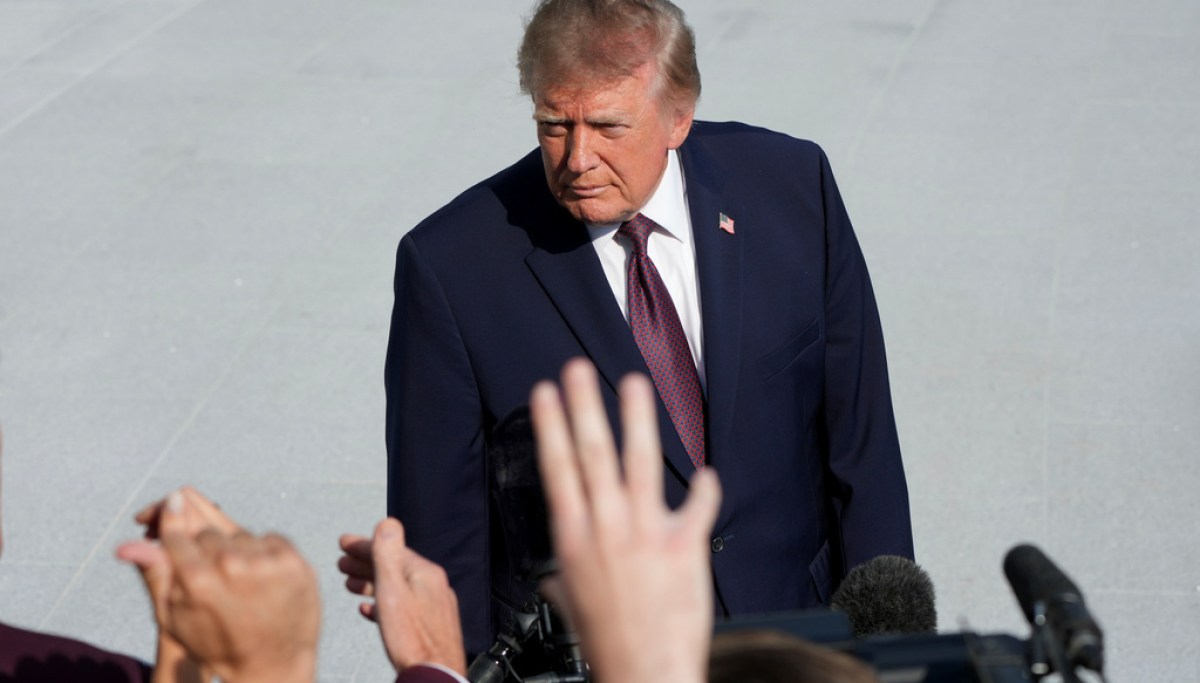
Trump Rallies in Alaska, Ohio to Bolster GOP Senate Candidates
The president rallied in Wasilla for Sen. Dan Sullivan and faced empty seats at an Ohio event amid midterm concerns. Outlets across the spectrum covered the trips as signals of GOP vulnerability weeks before Election Day.
The Compass
You just read five takes on one story.
What's your take? Find your political shape in a few minutes.
Take the test