
Supreme Court Upholds State Limits on Transgender Athletes in Girls' Sports
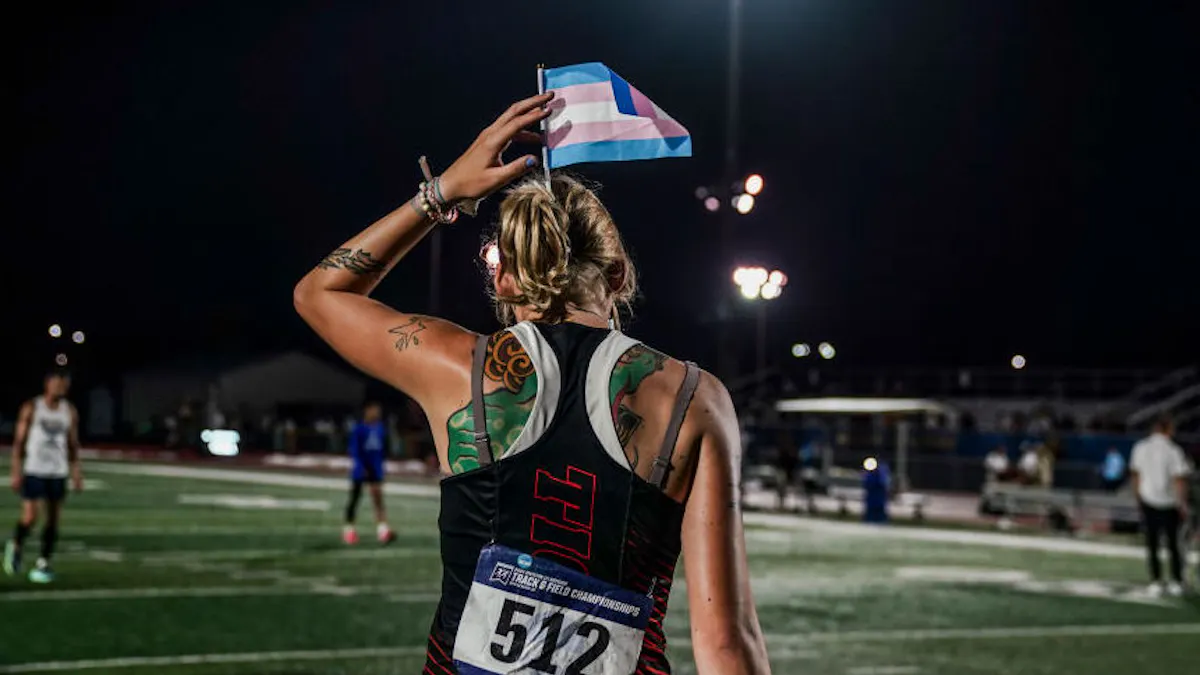
Cover image from dailywire.com, which was analyzed for this article
The Court allowed state laws barring transgender students from girls’ sports to stand, delivering a win for conservatives on gender issues in education and athletics.
PoliticalOS
Wednesday, July 1, 2026 — Politics
States may now maintain biology-based eligibility rules for female school sports without violating the Equal Protection Clause or Title IX. The 6-3 split leaves room for further litigation in states that permit participation based on gender identity.
What outlets missed
Neither outlet quoted or summarized the dissent’s core argument that the cases required further factual development on whether transgender athletes are similarly situated. Both pieces omitted any discussion of how the decision interacts with Bostock v. Clayton County beyond Gorsuch’s brief concurrence note. The articles also did not address the practical timeline for states considering new legislation or the status of ongoing lower-court cases outside the two circuits directly reversed.
The Supreme Court’s 6-3 ruling lets states keep girls’ and women’s school sports teams limited to biological females, preserving categories created under Title IX in 1972. The decision directly affects roster spots, scholarships, and records in states that have passed such laws, while leaving open whether states that allow broader participation could face new challenges.
The consolidated cases, West Virginia v. B.P.J. and Little v. Hecox, involved state statutes in West Virginia and Idaho that define sex by biology at birth and bar biological males from female teams. Lower courts in the Fourth and Ninth Circuits had blocked the laws, finding potential violations of the Equal Protection Clause. The Supreme Court reversed both rulings.
Justice Kavanaugh’s majority opinion applied intermediate scrutiny to the sex-based classifications and concluded that states have important interests in competitive fairness and safety that are substantially advanced by separating teams by biological sex. The opinion noted that Title IX expressly permits sex-specific teams and rejected case-by-case judicial assessments of hormone-suppressed advantages as unworkable. Justice Thomas concurred, stating that sex is binary and immutable and that transgender status does not trigger heightened scrutiny. Justice Gorsuch concurred on separate grounds, emphasizing that Title IX, as a Spending Clause statute, cannot impose obligations Congress did not clearly state.
Justices Sotomayor, Kagan, and Jackson dissented in part. They argued the equal-protection claims should return to lower courts for fact-finding on whether transgender athletes are similarly situated to biological females. Justice Jackson separately contended that Title IX should permit competition according to gender identity.
The ruling validates existing statutes in 27 states and removes the immediate constitutional barrier those laws faced. It does not require other states to adopt similar restrictions, setting up potential future litigation over whether allowing biological males on female teams itself violates Title IX.
More in Politics

Federal Agents Search Omar Home in Ongoing Immigration Probe
Homeland Security agents searched the Minnesota Democrat's DC residence in a criminal probe, prompting accusations of political intimidation from Omar and Democratic leaders. Coverage spans left-leaning outlets like NPR, BBC, and The Guardian alongside right-leaning criticism from The Federalist and Daily Wire.

Trump Diesel Import Plan Draws Pushback Over Russia Ties
The weekend agreement drew bipartisan congressional pushback and criticism from Ukraine's Zelenskyy, with analysts downplaying US fuel price impacts. Right-leaning outlets like National Review, Dispatch, and Washington Examiner questioned its legality and effectiveness.

Independents Test Voter Appetite for Middle Ground in 2026 Midterms
Nearly 200 independents are running in competitive races as voters weigh ballot measures on housing costs in states like Massachusetts. Left-leaning coverage from NYT, NPR, and Guardian highlights turnout and key races while right outlets focus on GOP strategy.
Trump Rallies in Alaska, Ohio to Bolster GOP Senate Candidates
The president rallied in Wasilla for Sen. Dan Sullivan and faced empty seats at an Ohio event amid midterm concerns. Outlets across the spectrum covered the trips as signals of GOP vulnerability weeks before Election Day.
The Compass
You just read five takes on one story.
What's your take? Find your political shape in a few minutes.
Take the test