
SCOTUS Redistricting Ruling Prompts Map Redraws in South
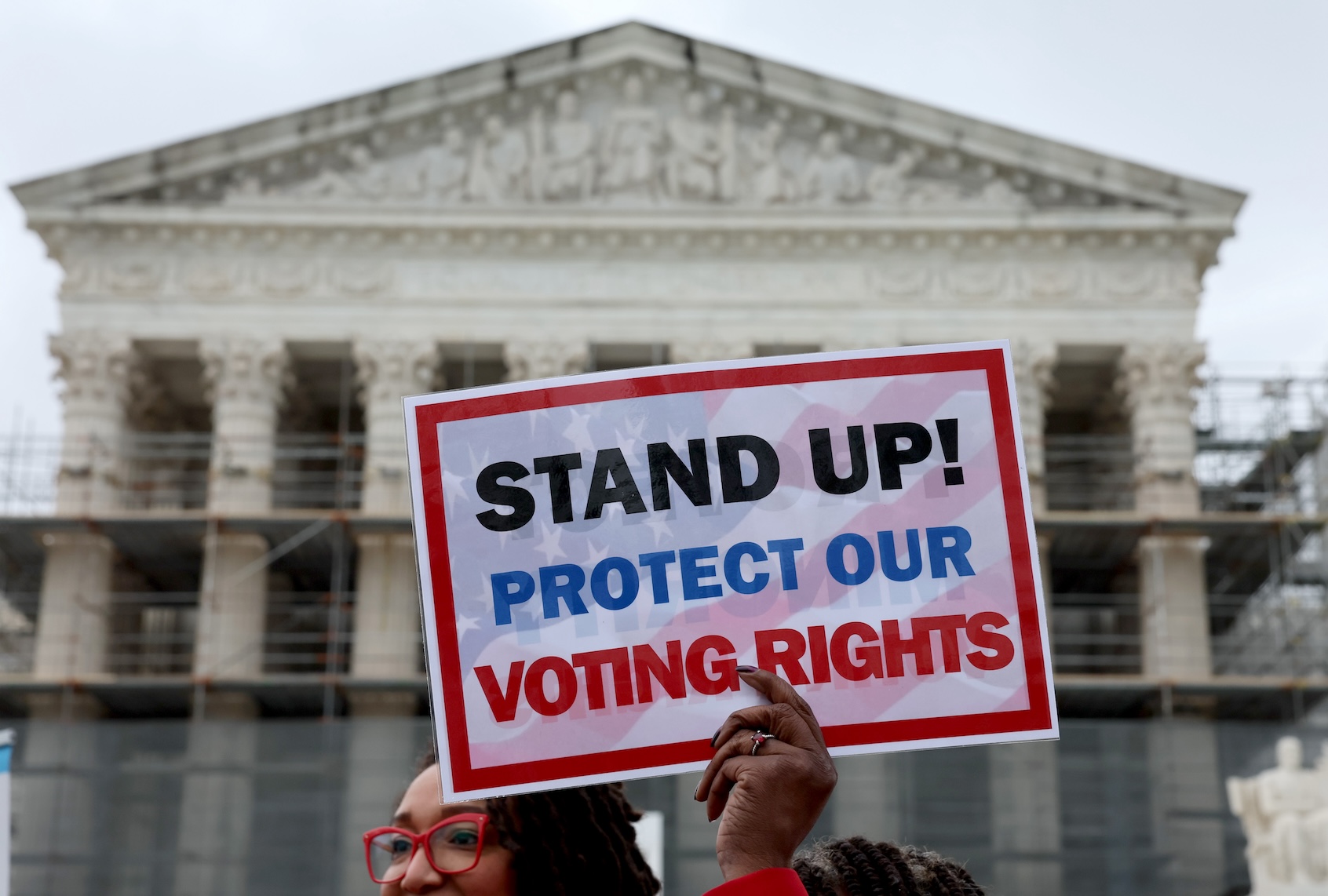
Cover image from salon.com, which was analyzed for this article
The Supreme Court decision in a key voting case could reduce Black representation in multiple districts. Legal experts debate effects on future elections and redistricting.
PoliticalOS
Saturday, May 16, 2026 — Politics
The ruling requires states to justify any predominant use of race in district lines under equal-protection standards. Multiple Southern states are already revising maps at congressional, state, and local levels. The extent of any reduction in majority-Black districts will depend on how lower courts apply the new precedent in pending cases.
What outlets missed
The Court’s opinion centered on whether race was the predominant factor in Louisiana’s map without adequate justification under equal-protection doctrine, not a wholesale rewrite of Section 2 standards. No outlet detailed the vote breakdown or the narrow tailoring analysis that formed the core of the holding. Local election impacts in counties such as DeSoto, Mississippi, received little attention despite their direct connection to ongoing Section 2 litigation. The decision’s potential interaction with state constitutional limits on redistricting was omitted entirely.
The Supreme Court’s decision in Louisiana v. Callais has set states across the South on a path to redraw electoral districts, raising questions about how many majority-Black districts will survive the next round of mapmaking ahead of the 2026 midterms and beyond.
In the ruling, the Court held that Louisiana’s congressional map, which created a second majority-Black district, violated the Equal Protection Clause because race predominated in its design and the state did not demonstrate that the configuration was narrowly tailored to comply with Section 2 of the Voting Rights Act. The decision did not alter Section 2’s results-based test into an intent requirement.
Republican-led states have already begun adjusting maps. Alabama moved to redraw state Senate districts to eliminate two majority-Black districts near Montgomery. Mississippi indicated plans to revise state supreme court districts before the 2027 election. Local government bodies, including county boards and school boards, face similar pressure because Section 2 also covers those lines.
Advocates for minority voters argue the ruling will reduce competitive seats and limit opportunities for Black candidates in state legislatures and local offices. A manager at the Legal Defense Fund cited DeSoto County, Mississippi, where Black residents comprise one-third of the population yet hold none of 25 elected positions on key boards. Officials in several states have suspended or accelerated redistricting processes to test the new boundaries.
Democratic groups view the ruling as increasing the stakes for state legislative races, where breaking Republican supermajorities could restore leverage over future maps. Map-drawers, speaking anonymously, noted that states already holding supermajorities may avoid further changes to Black Democratic districts to limit legal exposure under the Fourteenth Amendment.
The immediate effects will appear first in local elections and state legislative contests rather than congressional races, as those maps are redrawn under the same Section 2 framework.
More in Politics

Federal Agents Search Omar Home in Ongoing Immigration Probe
Homeland Security agents searched the Minnesota Democrat's DC residence in a criminal probe, prompting accusations of political intimidation from Omar and Democratic leaders. Coverage spans left-leaning outlets like NPR, BBC, and The Guardian alongside right-leaning criticism from The Federalist and Daily Wire.

Trump Diesel Import Plan Draws Pushback Over Russia Ties
The weekend agreement drew bipartisan congressional pushback and criticism from Ukraine's Zelenskyy, with analysts downplaying US fuel price impacts. Right-leaning outlets like National Review, Dispatch, and Washington Examiner questioned its legality and effectiveness.

Independents Test Voter Appetite for Middle Ground in 2026 Midterms
Nearly 200 independents are running in competitive races as voters weigh ballot measures on housing costs in states like Massachusetts. Left-leaning coverage from NYT, NPR, and Guardian highlights turnout and key races while right outlets focus on GOP strategy.
Trump Rallies in Alaska, Ohio to Bolster GOP Senate Candidates
The president rallied in Wasilla for Sen. Dan Sullivan and faced empty seats at an Ohio event amid midterm concerns. Outlets across the spectrum covered the trips as signals of GOP vulnerability weeks before Election Day.
The Compass
You just read five takes on one story.
What's your take? Find your political shape in a few minutes.
Take the test