
Supreme Court Tightens Voting Rights Proof Standard, Reshaping Maps
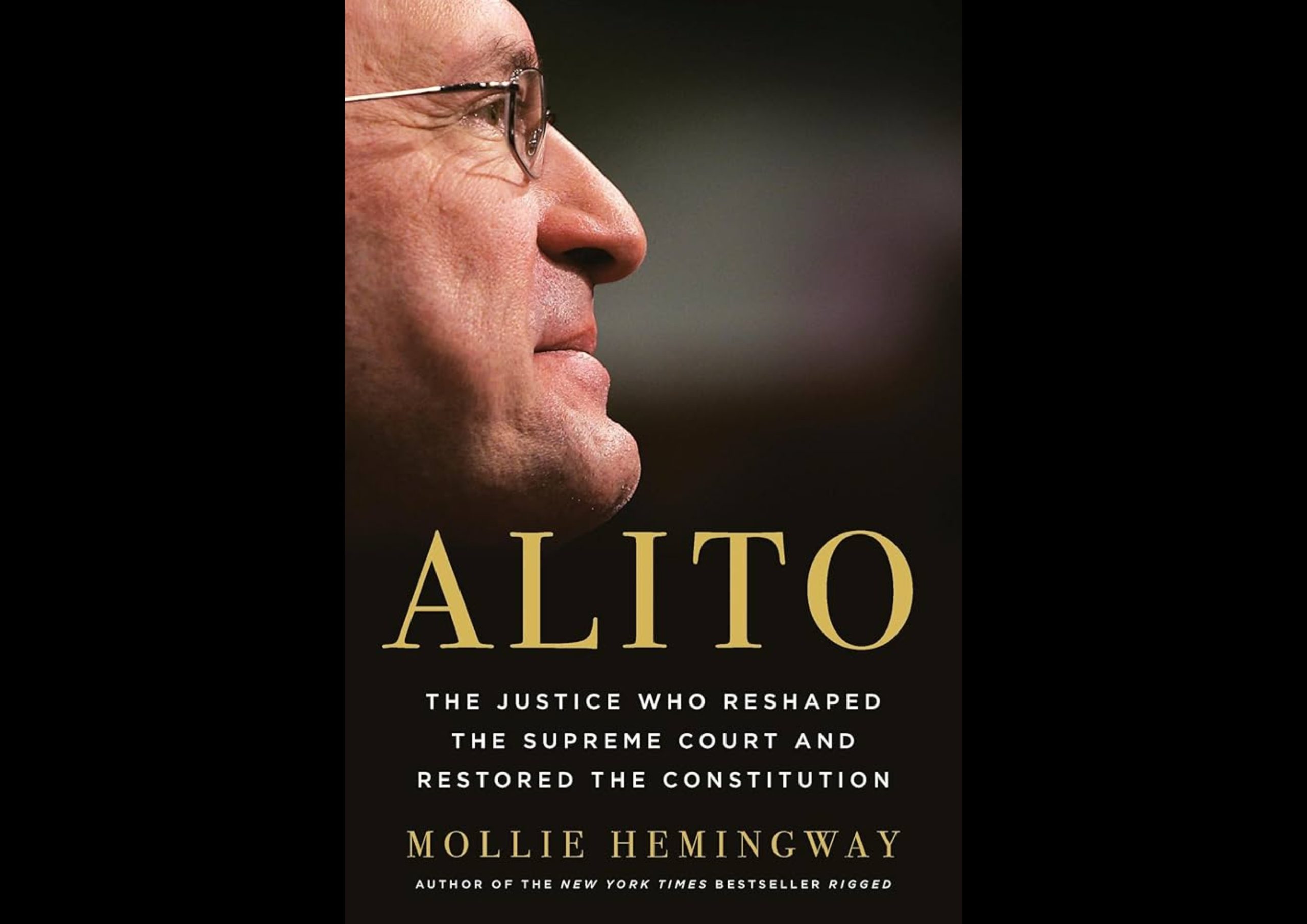
Cover image from freebeacon.com, which was analyzed for this article
The Supreme Court's voting rights ruling reveals a deep clash over racism's role in America, with critics arguing the court overly trusts the nation not to be racist. Justice Alito emphasized substantive matters in his approach.
PoliticalOS
Sunday, May 3, 2026 — Politics
The Supreme Court has raised the bar for proving racial discrimination in redistricting, requiring evidence that race predominated and that mapmakers acted with discriminatory intent. This 6-3 decision in Louisiana v. Callais does not eliminate the Voting Rights Act but limits race-based district drawing that violates equal protection principles. The central unresolved question is whether measurable increases in Black voter participation reflect genuine progress or mask subtler barriers that remain difficult to prove in court.
What outlets missed
Most coverage omitted that the challengers in Louisiana v. Callais were non-Black voters arguing the second majority-Black district violated the 14th Amendment by making race the predominant factor over traditional redistricting criteria such as compactness and communities of interest. The ruling did not invalidate Section 2 of the Voting Rights Act itself; it applied an intent-plus-effects standard to one specific irregularly shaped map. Analyses also underplayed Alito's detailed discussion of Black voter turnout data from recent presidential elections, which he presented as evidence of substantive progress even while acknowledging historical barriers. Coverage further downplayed the 2019 Rucho v. Common Cause precedent that removed federal courts from policing partisan gerrymanders, making the race-versus-party entanglement harder to adjudicate. Finally, few outlets noted that Louisiana legislators drew the challenged map under prior court pressure, creating a feedback loop the Supreme Court sought to end.
The Supreme Court decision that could redraw congressional and legislative boundaries across the South has thrust the nation back into its oldest argument: how much racism still distorts American elections, and what courts should do about it. In a 6-3 ruling handed down May 3, 2026, the justices struck down Louisiana's congressional map for relying too heavily on race when it created a second majority-Black district. The stakes reach far beyond one state. Similar maps in multiple Southern states now sit in legal jeopardy just months before midterm elections that will determine control of the House.
At the center of Louisiana v. Callais stands a single unresolved tension. Can plaintiffs prove that mapmakers drew lines to disadvantage Black voters without direct evidence of intent? Justice Samuel Alito, writing for the conservative majority, said no. The Voting Rights Act still prohibits discrimination, he wrote, but challengers must demonstrate that race predominated over traditional districting criteria and that officials acted with discriminatory purpose. The Louisiana map at issue, known as LA-6, stretched in a long, irregular shape to capture enough Black voters for a second majority-Black seat. Non-Black voters challenged it under the 14th and 15th Amendments, arguing it constituted an unconstitutional racial gerrymander that failed strict scrutiny. Lower courts had upheld the map; the Supreme Court reversed them.
Justice Elena Kagan's dissent called the new standard "well-nigh impossible" to meet. Lawmakers rarely announce racist motives in writing. Congress amended the Voting Rights Act in 1982 precisely to focus on effects rather than intent alone, she noted. The majority opinion, according to Kagan, ignores that reality and risks shielding subtle discrimination behind claims of partisan advantage. The Court had ruled in 2019 that federal courts cannot intervene in purely partisan gerrymanders, complicating the picture further.
Alito's opinion emphasized measurable progress since 1965. Black voter turnout now matches or exceeds white turnout in some recent presidential elections, both nationwide and in Louisiana, he wrote, citing election data. Civil rights organizations countered that turnout gaps persist in midterm and off-year contests. Census Bureau figures for 2020 and 2022 show Black turnout lagging white turnout by several percentage points in Louisiana; independent analyses by the Brennan Center have documented widening gaps in certain formerly covered jurisdictions after the 2013 Shelby County decision weakened preclearance requirements. These conflicting metrics remain subject to interpretation.
The ruling does not eliminate Section 2 of the Voting Rights Act. Maps can still be challenged on racial grounds. Yet the decision raises the evidentiary bar and declares that race cannot be the predominant factor in drawing districts unless the map satisfies strict scrutiny. States including Florida, Louisiana, Alabama, Tennessee and Mississippi moved quickly after the opinion. Louisiana delayed its primary elections to redraw maps. Florida adopted new lines projected to favor Republicans. Civil rights groups filed emergency challenges arguing that ballots already cast cannot be discarded. The precise legal status of those moves remains unresolved as lower courts consider emergency applications.
Reactions split along predictable lines. The NAACP Legal Defense Fund and ACLU described the decision as severely damaging minority voting power. Gerald Griggs, a Georgia civil rights lawyer and former NAACP state president, told reporters that modern discrimination operates through subtler systemic channels harder to prove in court. Georgetown law professor Stephen Bright pointed to precedents like the 1987 McCleskey death penalty case and Batson jury selection rulings, where the Court demanded proof of purposeful discrimination that often proves elusive.
Conservative voices welcomed the outcome. Ohio Republican state Representative Josh Williams, who represents a majority-white district, called race-based districting "nonsense" and unconstitutional. Quin Hillyer, an Alabama conservative commentator, argued that modern Republican mapmakers would happily include Black voters who support the party. The decision aligns with the Court's recent moves toward what Chief Justice John Roberts once termed a "colorblind Constitution," including the 2023 affirmative action ruling.
The case reveals deeper entanglement. In the South, race and partisan preference overlap heavily: most Black voters are Democrats, most white voters are Republicans. Justice Alito warned against allowing political gerrymandering claims to masquerade as racial ones. Academic researchers describe this overlap as the central difficulty in modern redistricting litigation. Stephen Menendian of UC Berkeley has written that the risk runs both ways: racial gerrymanders may hide behind partisanship, or legitimate partisan maps may be wrongly labeled racial ones.
Lost in much coverage is the identity of the challengers. Phillip Callais and other non-Black Louisiana voters brought the suit, arguing their votes were diluted by a map that prioritized race over compactness and traditional communities of interest. The mapmakers themselves were state legislators responding to earlier court pressure to create two majority-Black districts out of six. Louisiana has never elected a Black member of Congress from a non-majority-Black district.
Projections of political fallout vary widely. Some advocates warn that up to 30 percent of Congressional Black Caucus seats and nearly 200 Southern state legislative seats held by Democrats could vanish. Those figures have not been corroborated by independent nonpartisan analyses and remain speculative. What is clear is that several states have already begun redrawing maps, litigation will continue through 2026, and the practical effect will be fewer districts intentionally designed to guarantee minority representation.
The ruling arrives during a second Trump administration that has moved against diversity programs and seen turnover in the Justice Department's civil rights division. Whether those developments compound the decision's impact is disputed. What cannot be disputed is that the Voting Rights Act, once viewed as a transformative constraint on Southern politics, now faces its narrowest interpretation in decades. The phoenix George White invoked in 1901 rose through federal intervention. Whether it can sustain itself under current rules will be tested map by map, lawsuit by lawsuit, election by election.
More in Politics

Federal Agents Search Omar Home in Ongoing Immigration Probe
Homeland Security agents searched the Minnesota Democrat's DC residence in a criminal probe, prompting accusations of political intimidation from Omar and Democratic leaders. Coverage spans left-leaning outlets like NPR, BBC, and The Guardian alongside right-leaning criticism from The Federalist and Daily Wire.

Trump Diesel Import Plan Draws Pushback Over Russia Ties
The weekend agreement drew bipartisan congressional pushback and criticism from Ukraine's Zelenskyy, with analysts downplaying US fuel price impacts. Right-leaning outlets like National Review, Dispatch, and Washington Examiner questioned its legality and effectiveness.

Independents Test Voter Appetite for Middle Ground in 2026 Midterms
Nearly 200 independents are running in competitive races as voters weigh ballot measures on housing costs in states like Massachusetts. Left-leaning coverage from NYT, NPR, and Guardian highlights turnout and key races while right outlets focus on GOP strategy.

Trump Rallies in Alaska, Ohio to Bolster GOP Senate Candidates
The president rallied in Wasilla for Sen. Dan Sullivan and faced empty seats at an Ohio event amid midterm concerns. Outlets across the spectrum covered the trips as signals of GOP vulnerability weeks before Election Day.
The Compass
You just read five takes on one story.
What's your take? Find your political shape in a few minutes.
Take the test