
Senate Rejects Democrats' Fifth Bid to Limit Trump's Iran War Powers
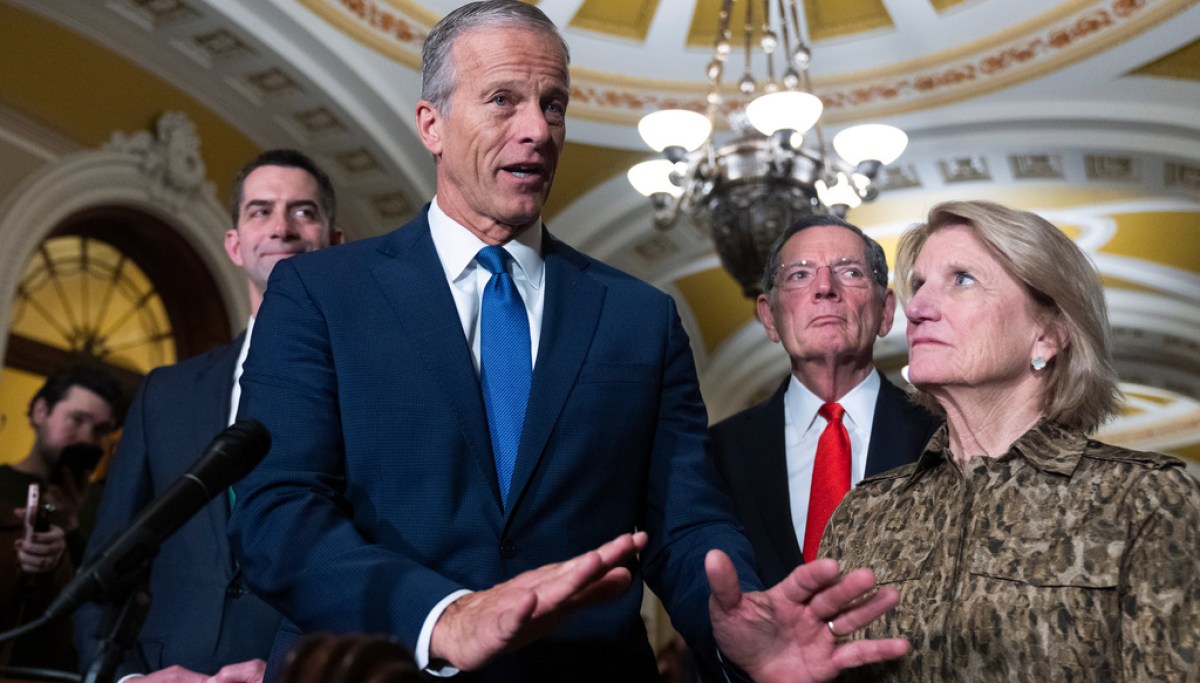
Cover image from washingtonexaminer.com, which was analyzed for this article
Republicans defeated the fifth Democratic attempt to restrict Trump's authority in the Iran conflict, affirming his flexibility. Votes underscore partisan divide on military actions. Ties into broader Hormuz and ceasefire debates.
PoliticalOS
Thursday, April 23, 2026 — Politics
Senate Republicans continue to back President Trump's flexibility to conduct operations against Iran, defeating Democratic resolutions for the fifth time. The 51-46 vote leaves the administration in charge as the War Powers Act 60-day limit nears, even as casualties mount, gas prices rise and cease-fire talks proceed. Readers should understand the constitutional tension remains unresolved along strict partisan lines.
What outlets missed
Most coverage omitted the approaching April 28 deadline under the War Powers Act, which will legally require the administration to obtain congressional authorization or withdraw forces. Reports also underplayed Sen. Lisa Murkowski's role in drafting potential authorizing legislation and her early acknowledgment that Trump should have sought Congress's approval from the start. The full sequence of Iranian retaliatory strikes on U.S. and allied targets after the initial Feb. 28 action received limited attention, as did details on third-party mediation involving Pakistan that preceded the cease-fire extension. Finally, the precise mechanics of Democratic plans for weekly votes and debates to keep the issue alive were rarely explained in full.
Rising gas prices at American pumps and the continued presence of U.S. forces in a volatile Middle East have thrust the question of war authority back into Congress. On April 23, Senate Republicans defeated a Democratic effort to compel the withdrawal of American troops from hostilities with Iran. The 51-46 vote marked the fifth rejection of such a measure since March 4.
At the center of the dispute lies a single unresolved tension: whether President Donald Trump must obtain explicit congressional approval for continued operations as the 60-day clock under the War Powers Act expires on April 28. Democrats insist the Constitution reserves the power to declare war for Congress alone. Republicans counter that existing threats, particularly Iran's nuclear infrastructure, leave little alternative to sustained military pressure.
The resolution, introduced by Sen. Tammy Baldwin of Wisconsin, sought to direct the removal of U.S. armed forces from hostilities absent new authorization. It failed largely along party lines. Republican Sen. Rand Paul of Kentucky joined Democrats in support. Democratic Sen. John Fetterman of Pennsylvania voted with the GOP.
Baldwin argued on the Senate floor that the campaign had dragged on without a clear strategy. She cited an initial expectation that fighting would conclude quickly. Instead, two months later, no resolution is in sight. Sen. Tammy Duckworth of Illinois, a combat veteran, issued a statement pledging continued Democratic efforts to constrain the operation, citing risks to troops and economic fallout at home.
Republican Sen. Lisa Murkowski of Alaska has publicly stated that Trump should have sought congressional buy-in from the outset. She is reportedly guiding GOP drafting of legislation that would authorize continued military action to neutralize Iran's nuclear weapons capability. "My focus is on the safety of America's armed forces and the American civilians who are on the ground in the Middle East," Murkowski said in a March statement.
The conflict erupted on Feb. 28 with U.S. and Israeli strikes on Iranian nuclear facilities, missile sites and leadership targets. Reports from BBC and other outlets indicate the action followed stalled diplomatic efforts. Iran responded with missile and drone attacks on U.S. bases, Israeli territory and regional infrastructure. According to one tally cited by UPI, 13 Americans have died since the fighting began. A human rights monitoring group, HRANA, reported at least 3,646 deaths inside Iran. These figures could not be independently verified across all sources reviewed.
Economic effects have been immediate. Iran restricted access through the Strait of Hormuz, a critical energy chokepoint. The United States enforced a blockade of Iranian ports. The combined actions drove up global oil prices and domestic gasoline costs.
A two-week cease-fire was set to expire but Trump announced an indefinite extension to allow negotiations to continue. On the day of the Senate vote, Iranian forces claimed to have seized two cargo ships near the waterway. Mediators, including officials from Pakistan and U.S. envoys such as Jared Kushner, Steve Witkoff and Vice President JD Vance, have engaged in indirect talks. New York Times correspondent Maggie Haberman reported that Trump has voiced daily frustration with the conflict's duration and wishes to shift focus elsewhere. She noted, however, that Iranian and Pakistani perspectives appear to diverge from the administration's assessment of progress.
Democrats have vowed to force weekly floor debates and votes on the war. The strategy aims to compel Republicans to repeatedly defend their position publicly. The approaching War Powers Act deadline adds urgency. Without new authorization after April 28, the administration would technically be required to seek congressional approval or begin withdrawal.
The votes underscore a durable partisan split on executive war powers. Republicans largely affirm the need for presidential flexibility against a regime they describe as an imminent nuclear danger. Democrats view the operation as legally questionable and strategically flawed. No resolution to that core disagreement emerged from Wednesday's session.
What happens next remains unclear. Murkowski's working group may produce authorizing language before the deadline. Democrats show no sign of dropping their procedural pressure. In the meantime, U.S. forces remain engaged under an extended cease-fire that both sides have tested with limited maritime actions. The constitutional stakes, the human toll and the pocketbook impact on American households all persist.
More in Politics

Federal Agents Search Omar Home in Ongoing Immigration Probe
Homeland Security agents searched the Minnesota Democrat's DC residence in a criminal probe, prompting accusations of political intimidation from Omar and Democratic leaders. Coverage spans left-leaning outlets like NPR, BBC, and The Guardian alongside right-leaning criticism from The Federalist and Daily Wire.

Trump Diesel Import Plan Draws Pushback Over Russia Ties
The weekend agreement drew bipartisan congressional pushback and criticism from Ukraine's Zelenskyy, with analysts downplaying US fuel price impacts. Right-leaning outlets like National Review, Dispatch, and Washington Examiner questioned its legality and effectiveness.

Independents Test Voter Appetite for Middle Ground in 2026 Midterms
Nearly 200 independents are running in competitive races as voters weigh ballot measures on housing costs in states like Massachusetts. Left-leaning coverage from NYT, NPR, and Guardian highlights turnout and key races while right outlets focus on GOP strategy.
Trump Rallies in Alaska, Ohio to Bolster GOP Senate Candidates
The president rallied in Wasilla for Sen. Dan Sullivan and faced empty seats at an Ohio event amid midterm concerns. Outlets across the spectrum covered the trips as signals of GOP vulnerability weeks before Election Day.
The Compass
You just read five takes on one story.
What's your take? Find your political shape in a few minutes.
Take the test