
Senate Votes to Withhold Pay During Future Shutdowns
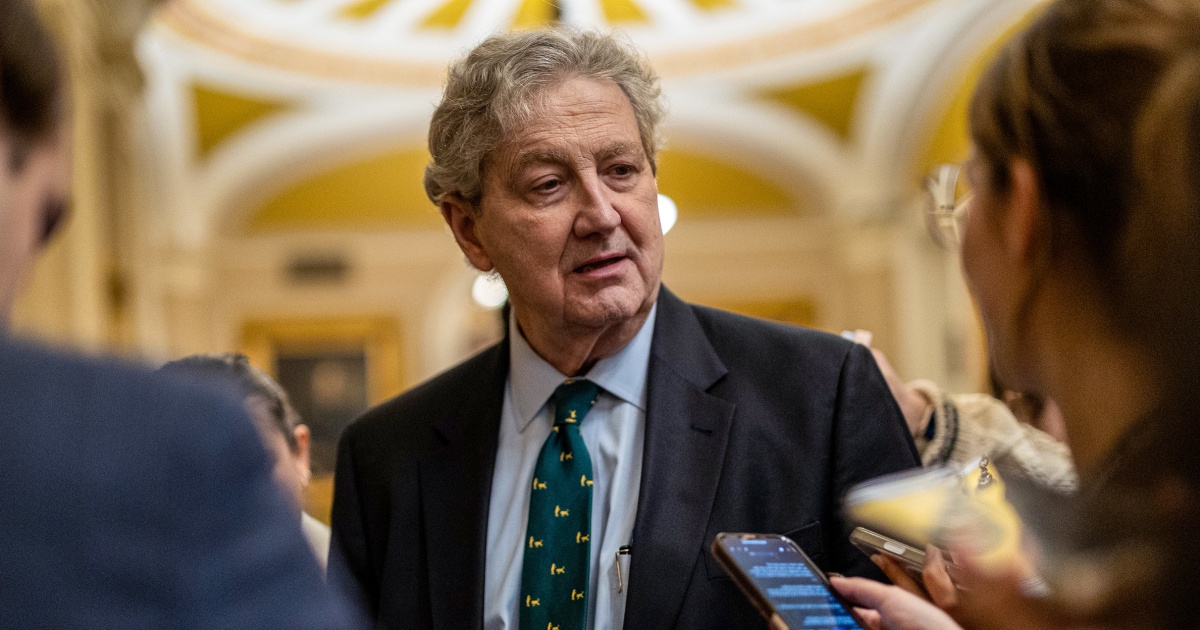
Cover image from nbcnews.com, which was analyzed for this article
Senators passed a bipartisan resolution to withhold their paychecks during future government shutdowns, following historic closures that left workers unpaid. The measure aims to ensure accountability. It passed unanimously.
PoliticalOS
Thursday, May 14, 2026 — Politics
The Senate has adopted a rule that will temporarily withhold its own pay during future shutdowns, yet the measure applies only to senators, begins after the 2026 election, and restores full back pay once funding returns. It creates a symbolic incentive for quicker resolutions without altering the underlying constitutional or procedural realities that produced recent record-length closures.
What outlets missed
Most coverage omitted that the resolution binds only the Senate and leaves House members untouched. Few noted the 27th Amendment forces the post-election start date, turning an apparent delay into a constitutional requirement rather than a choice. Outlets rarely clarified that senators receive full back pay once funding returns, making the measure a temporary deferral identical to the treatment of roughly two million federal workers. Specific triggers for the two recent shutdowns—ACA subsidy extensions in 2025 and immigration-enforcement disputes in 2026—were mentioned only sporadically, leaving readers without the policy disagreements that produced the impasses.
Federal workers have endured weeks without paychecks during repeated government shutdowns. Senators now face the same prospect under a new rule they approved themselves.
The Senate passed the measure unanimously on May 14 by voice vote after a 99-0 procedural step. Sponsored by Sen. John Kennedy, R-La., the resolution directs the secretary of the Senate to hold lawmakers' salaries in escrow whenever funding lapses for one or more agencies. The money is released once appropriations resume, exactly as federal employees receive back pay under existing law. The change takes effect the day after the November 2026 midterm elections because the 27th Amendment bars immediate pay adjustments for sitting members.
Recent shutdowns set the context. A 43-day full closure in late 2025 began after Democrats conditioned funding on extensions of enhanced health-care subsidies. A separate 76-day lapse at the Department of Homeland Security ended in late April 2026 amid disputes over immigration-enforcement reforms. Both episodes left hundreds of thousands of workers unpaid and produced the longest funding gaps on record for their respective scopes.
Kennedy described the step as shared sacrifice. "Shutting down government should not be our default solution to our refusal to work out our issues and our differences," he said on the floor. The resolution applies only to senators; House members remain unaffected unless that chamber adopts its own rule. Similar proposals have surfaced in prior shutdowns, including voluntary pay refusals in 2018-19 and 2025, but none carried the force of a standing Senate rule until now.
More in Politics

Federal Agents Search Omar Home in Ongoing Immigration Probe
Homeland Security agents searched the Minnesota Democrat's DC residence in a criminal probe, prompting accusations of political intimidation from Omar and Democratic leaders. Coverage spans left-leaning outlets like NPR, BBC, and The Guardian alongside right-leaning criticism from The Federalist and Daily Wire.

Trump Diesel Import Plan Draws Pushback Over Russia Ties
The weekend agreement drew bipartisan congressional pushback and criticism from Ukraine's Zelenskyy, with analysts downplaying US fuel price impacts. Right-leaning outlets like National Review, Dispatch, and Washington Examiner questioned its legality and effectiveness.

Independents Test Voter Appetite for Middle Ground in 2026 Midterms
Nearly 200 independents are running in competitive races as voters weigh ballot measures on housing costs in states like Massachusetts. Left-leaning coverage from NYT, NPR, and Guardian highlights turnout and key races while right outlets focus on GOP strategy.
Trump Rallies in Alaska, Ohio to Bolster GOP Senate Candidates
The president rallied in Wasilla for Sen. Dan Sullivan and faced empty seats at an Ohio event amid midterm concerns. Outlets across the spectrum covered the trips as signals of GOP vulnerability weeks before Election Day.
The Compass
You just read five takes on one story.
What's your take? Find your political shape in a few minutes.
Take the test