
Trump's Team Shakeup: Purge or Accountability Amid War Backdrop
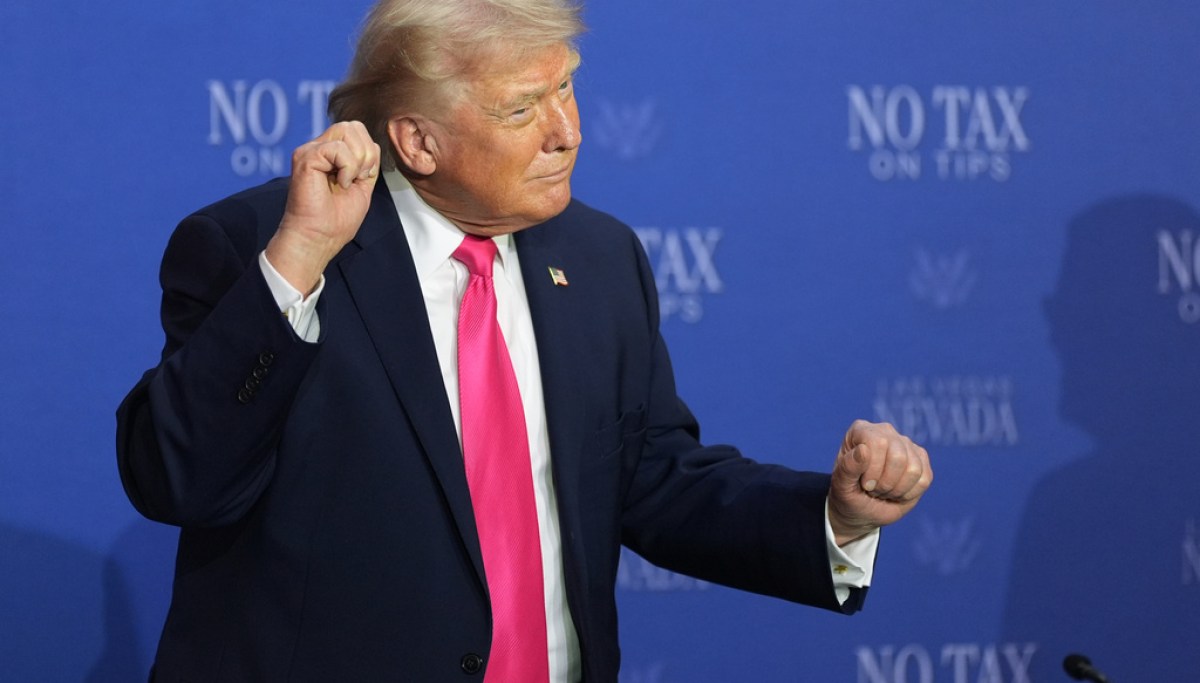
Cover image from washingtonexaminer.com, which was analyzed for this article
Widespread personnel changes dubbed a 'purge' by critics target Congress oversight and Pentagon, with Navy chief out. Defenders call it accountability after Biden holdovers. Spring cleaning tests Trump's coalition limits.
PoliticalOS
Thursday, April 23, 2026 — Politics
Multiple high-ranking officials across the Pentagon, Cabinet, and Congress have departed or been removed in a compressed window, occurring against the backdrop of U.S. military action in Iran that raised energy costs and hurt presidential approval. Specific reasons for several military exits rely on anonymous or unverified accounts that other outlets could not corroborate, while the administration has publicly cited merit and performance. The most important reality is that these changes test continuity and readiness at a sensitive moment; readers should distinguish between confirmed announcements and unattributed claims about motives.
What outlets missed
Most coverage omitted the February 2026 sequence of Iranian proxy attacks that preceded U.S.-Israeli strikes, the subsequent Iranian missile response on U.S. bases, and the fact that the Iranian Supreme Leader was killed during the exchanges. Pentagon statements citing performance reviews and meritocracy as drivers for the military changes received little attention outside conservative outlets and were not balanced against anonymous sourcing in mainstream reporting. The immediate court injunction blocking certification of Virginia's redistricting results on April 22 was rarely noted, softening the perceived finality of that Democratic gain. Specific ethics triggers for the three congressional resignations, including documented indictments and admissions, were downplayed by outlets preferring a generic "purge era" narrative. Low voter turnout of 47.94 percent in the Virginia referendum also went largely unmentioned, providing important context for the narrow margin.
High-level exits are piling up inside the Trump administration at a moment of elevated global tensions and softening domestic support. Over two months, at least five senior officials have left their roles. Critics label the changes a purge that risks stability. Defenders describe them as routine accountability applied to holdovers and underperformers. The central tension is whether these moves will deliver more effective leadership or erode expertise precisely when it is needed most.
The Pentagon announced on April 23, 2026, that Navy Secretary John Phelan would depart immediately after 13 months in the role. Spokesman Sean Parnell for Defense Secretary Pete Hegseth confirmed the exit. An administration official told The Washington Post that Phelan had been asked to step down following repeated clashes with Hegseth over shipbuilding programs and management. Those specific clashes were not corroborated by other outlets and remain unverified. Navy Undersecretary Hung Cao will serve as acting secretary. The departure forms part of broader military leadership turnover. Former Army Chief of Staff Gen. Randy George stepped down this month, earlier than his expected 2027 departure. Defense officials told The Washington Post that Hegseth requested the change. Two additional Army generals, David Hodne of Training and Transformation Command and Maj. Gen. William Green Jr., the chief of Army chaplains, were also removed. Reasons for their exits were not detailed publicly.
These military shifts follow an earlier wave. In February 2025 the administration dismissed Joint Chiefs Chairman Gen. Charles Q. Brown Jr., Navy head Adm. Lisa Franchetti, Coast Guard Commandant Adm. Linda Fagan and Air Force Vice Chief Gen. James Slife. Air Force Chief of Staff Gen. David Allvin was asked to retire early in August 2025. Pentagon statements reviewed by Fox News framed the recent officer removals as outcomes of performance reviews emphasizing meritocracy. One conservative column cited an unverified 2024 incident in which Gen. George allegedly approved a promotion waiver for an officer who had twice failed the Battalion Command Assessment Program; that account could not be independently verified across reporting. A separate claim regarding Gen. Green's handling of chaplaincy contracts also lacked corroboration in primary military records.
Cabinet departures tracked similar timelines. Attorney General Pam Bondi left her post this month after 14 months. President Trump announced the move on social media, calling Bondi a "Great American Patriot" transitioning to a new private-sector role. Reporting from The Washington Post indicated Trump had grown frustrated with the Justice Department's pace on certain investigations, including the delayed public release of Jeffrey Epstein-related files. Labor Secretary Lori Chavez-DeRemer resigned to enter the private sector. The White House cited a complaint filed with the Labor Department's inspector general alleging professional misconduct, including personal travel on taxpayer-funded trips. Chavez-DeRemer's attorney stated the resignation aimed to avoid distraction and did not stem from legal wrongdoing. Deputy Labor Secretary Keith Sonderling became acting chief.
Homeland Security Secretary Kristi Noem was replaced in March by Sen. Markwayne Mullin. Trump reassigned Noem as Special Envoy for The Shield of the Americas, a Western Hemisphere security initiative. The move followed criticism from some Republicans over her department's aggressive deportation efforts and leadership style. Her top aide, Corey Lewandowski, departed the same month. The two-month cluster of exits coincides with U.S.-Israeli military action against Iran. Strikes in February 2026 targeted Iranian military and nuclear sites in response to proxy attacks, according to the Council on Foreign Relations Global Conflict Tracker. Iran retaliated with missiles against U.S. bases; the Iranian Supreme Leader was killed in the exchanges. Pew Research reported 61 percent of Americans disapprove of U.S. handling of the conflict. Energy prices rose. Trump's approval ratings slipped.
Separate but parallel developments fueled wider "purge" rhetoric. Three House members resigned between mid-April and late April 2026: Democrats Eric Swalwell and Sheila Cherfilus-McCormick and Republican Tony Gonzales. House records show all three departures were voluntary. Swalwell faced sexual misconduct allegations from four women. Gonzales admitted an affair with a staffer. Cherfilus-McCormick had been federally indicted on $5 million FEMA fraud charges. NPR and Axios described the exits as symptoms of an ethics crisis in a narrowly divided Congress rather than coordinated removal. Virginia voters narrowly approved a redistricting amendment on April 21 that could favor Democrats, shifting the state's congressional map from 6-5 to as much as 10-1. A Tazewell County Circuit Court judge enjoined certification the next day, delaying any effect. Turnout reached 47.94 percent. The outcome triggered intra-GOP recriminations over redistricting strategy and whether traditional neutral rules remain viable.
Reactions split along predictable lines. House Armed Services Committee Democrats warned the wartime military firings could undermine readiness. Conservative commentators emphasized civilian control of the military as a foundational principle and noted that President Obama had removed numerous generals and admirals with less controversy. The scale remains limited: three Army generals and a handful of Cabinet officials from a much larger executive apparatus. Unresolved questions linger over continuity at the Pentagon during any future escalation and whether the administration can retain institutional knowledge while installing new leadership. Midterm calculations now include these vacancies. Spring cleaning, in the end, always reveals what breaks.
More in Politics

Federal Agents Search Omar Home in Ongoing Immigration Probe
Homeland Security agents searched the Minnesota Democrat's DC residence in a criminal probe, prompting accusations of political intimidation from Omar and Democratic leaders. Coverage spans left-leaning outlets like NPR, BBC, and The Guardian alongside right-leaning criticism from The Federalist and Daily Wire.

Trump Diesel Import Plan Draws Pushback Over Russia Ties
The weekend agreement drew bipartisan congressional pushback and criticism from Ukraine's Zelenskyy, with analysts downplaying US fuel price impacts. Right-leaning outlets like National Review, Dispatch, and Washington Examiner questioned its legality and effectiveness.

Independents Test Voter Appetite for Middle Ground in 2026 Midterms
Nearly 200 independents are running in competitive races as voters weigh ballot measures on housing costs in states like Massachusetts. Left-leaning coverage from NYT, NPR, and Guardian highlights turnout and key races while right outlets focus on GOP strategy.
Trump Rallies in Alaska, Ohio to Bolster GOP Senate Candidates
The president rallied in Wasilla for Sen. Dan Sullivan and faced empty seats at an Ohio event amid midterm concerns. Outlets across the spectrum covered the trips as signals of GOP vulnerability weeks before Election Day.
The Compass
You just read five takes on one story.
What's your take? Find your political shape in a few minutes.
Take the test