
Trump's Approval Hits Record Lows on Economy and Iran

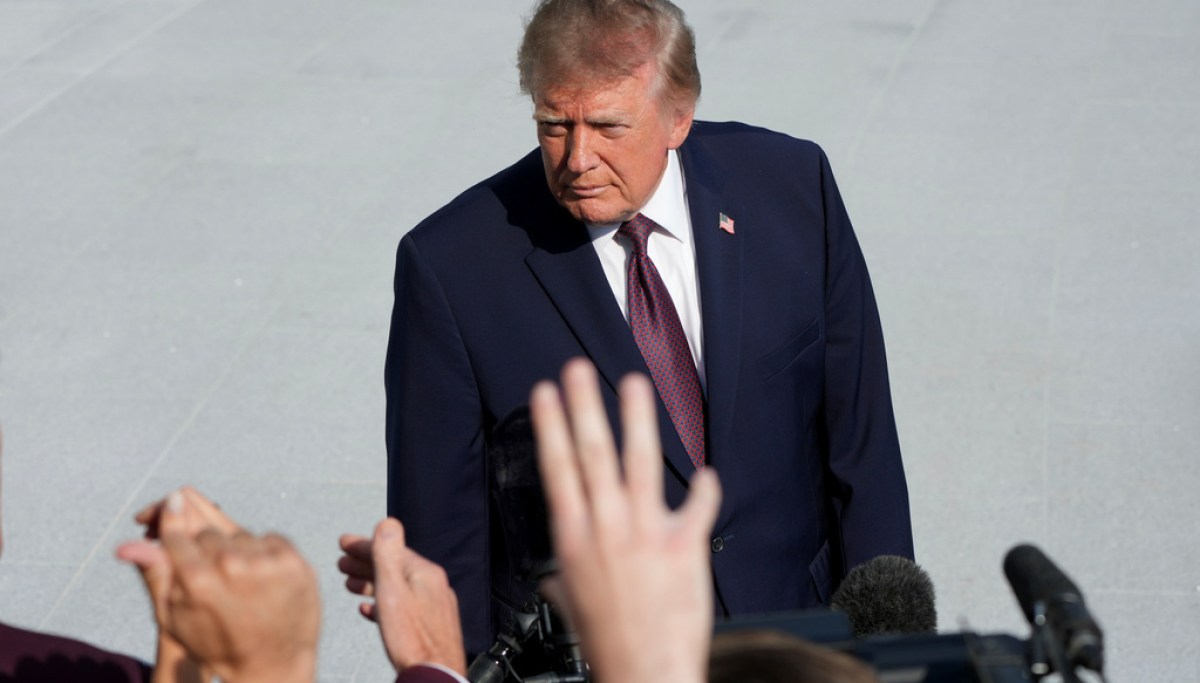
Cover image from cnbc.com, which was analyzed for this article
Polls show Trump's net approval on economy at two-term low, with overall popularity tumbling amid endless Iran war. Republicans spooked as midterms loom; focus shifts from economy. International allies distance amid strategy critiques.
PoliticalOS
Thursday, April 23, 2026 — Politics
The CNBC survey provides the clearest verified evidence that Trump's handling of the economy and Iran has driven his net approval to record lows, fueled primarily by higher gas prices that Americans are feeling directly. Core MAGA support holds, but erosion among other Republicans, independents and key 2024 demographics raises genuine midterm risks for the GOP. The central unknown is whether easing energy costs and any perceived nuclear-security gains can restore the economic brand that won Trump the White House twice.
What outlets missed
Most coverage omitted the sequenced timeline of the Iran conflict: Israeli strikes on Iranian nuclear and military sites in June 2025, Iran's immediate missile response, the failure of U.S.-Iran nuclear talks in Geneva in February 2026, and only then direct U.S. involvement. These steps, detailed in Al Jazeera timelines and UK parliamentary briefings, complicate narratives of a unilateral American 'war of choice.' Outlets also underplayed poll findings that 53 percent of Americans still view disrupting Iran's nuclear program as worthwhile despite costs. Finally, concrete administration steps on drug pricing, housing executive orders and tax refunds received minimal treatment, even when cited by White House spokespeople.
Higher gas prices and the human and financial costs of conflict with Iran are landing squarely on American households. A CNBC survey released this week captures the result: President Trump's net approval has fallen to the lowest levels of his two terms, with clear erosion even among Republicans who backed him through previous storms.
The central tension is whether this drop reflects a temporary hit from war-driven inflation or a lasting breach in the economic contract that twice elected him. The CNBC All-America Economic Survey of 1,000 adults, conducted with Republican and Democratic pollsters and carrying a 3.1-point margin of error, shows Trump's overall approval at 40 percent and disapproval at 58 percent, for a net rating of minus-18. That is 10 points worse than the prior quarter. On the economy the numbers are minus-21, the deepest disapproval recorded by this poll in either Trump term.
Gasoline near $4 a gallon is the most immediate culprit. Nearly 80 percent of respondents told the pollsters they have already cut spending, delayed travel or leaned on credit cards because of fuel costs. A 64 percent majority said the Iran conflict is not worth the added financial burden or the price surge at the pump. Yet the same survey found 53 percent believe the military action was worthwhile to set back Iran's nuclear program. That split, between immediate pain and longer-term security, runs through every demographic.
Republican support has softened but not collapsed. Overall GOP approval of Trump fell 17 points to 82 percent. Among non-MAGA Republicans the decline was steeper, 19 points to 60 percent. Hard-core MAGA voters remain at 96 percent approval. Independent voters moved sharply negative. So did Latinos and white voters without college degrees, groups that helped deliver the 2024 victory.
The survey arrives six months before midterm elections that will determine whether Trump governs with Republican majorities or faces Democratic investigations. Thirty-eight House Republicans have already announced they will not seek re-election, compared with 23 Democrats, according to trackers cited across outlets. Some GOP voices warn that voters who rewarded Trump for pre-war economic messaging may punish distraction. Others note that Democratic favorability ratings remain underwater as well, limiting any automatic opposition gain.
Iran's seizure of two commercial vessels in the Strait of Hormuz, reported by multiple outlets including the Financial Times and Al Jazeera, has intensified pressure on energy markets. The action followed Iranian missile exchanges with Israel and the United States and came after the collapse of nuclear talks in Geneva. Those earlier steps, first reported by Al Jazeera and corroborated in congressional research briefings, received less attention in domestic political coverage than the polling fallout.
Administration officials point to executive actions on housing, prescription-drug pricing and tax refunds as evidence of continued economic focus. White House spokesman Kush Desai told CNBC the president can address multiple priorities at once. Independent analysts say the test will be whether prices ease before voters cast ballots. One anonymous Republican operative told CNBC that gas prices may recede in public memory amid coming news cycles, provided the conflict does not widen.
High-profile conservative commentators have criticized aspects of the war, though specific claims of widespread MAGA defections or conspiracy theories about past events could not be independently verified across sources. Tucker Carlson, Joe Rogan and others have voiced foreign-policy reservations in the past; the precise degree of current regret remains a matter of selective quotation. Polls cited by the Washington Examiner suggesting strong public support for action against Iran's nuclear program before the strikes could not be corroborated in aggregate trackers.
What unites the data is the pocketbook signal. Inflation remains the top concern for 41 percent of voters in one YouGov sample, dwarfing unemployment. Trump's past strength on border security and immigration has also slipped in some surveys after reported enforcement adjustments, though those shifts are smaller than the economic decline.
Democrats see an opening to reclaim the cost-of-living argument they lost in 2024. Republicans counter that the public still trusts them more than the opposition on the economy, a four-point edge that has held in recent CNBC soundings. Both sides acknowledge the map is tight. Heavy losses in November would shrink Trump's legislative runway and invite congressional scrutiny of White House operations.
The numbers are stark. The unresolved question is whether they harden into political reality or fade if the Strait of Hormuz quiets and pump prices follow. For millions of drivers filling tanks and families stretching paychecks, that answer cannot wait until Election Day.
More in Politics

Federal Agents Search Omar Home in Ongoing Immigration Probe
Homeland Security agents searched the Minnesota Democrat's DC residence in a criminal probe, prompting accusations of political intimidation from Omar and Democratic leaders. Coverage spans left-leaning outlets like NPR, BBC, and The Guardian alongside right-leaning criticism from The Federalist and Daily Wire.

Trump Diesel Import Plan Draws Pushback Over Russia Ties
The weekend agreement drew bipartisan congressional pushback and criticism from Ukraine's Zelenskyy, with analysts downplaying US fuel price impacts. Right-leaning outlets like National Review, Dispatch, and Washington Examiner questioned its legality and effectiveness.

Independents Test Voter Appetite for Middle Ground in 2026 Midterms
Nearly 200 independents are running in competitive races as voters weigh ballot measures on housing costs in states like Massachusetts. Left-leaning coverage from NYT, NPR, and Guardian highlights turnout and key races while right outlets focus on GOP strategy.
Trump Rallies in Alaska, Ohio to Bolster GOP Senate Candidates
The president rallied in Wasilla for Sen. Dan Sullivan and faced empty seats at an Ohio event amid midterm concerns. Outlets across the spectrum covered the trips as signals of GOP vulnerability weeks before Election Day.
The Compass
You just read five takes on one story.
What's your take? Find your political shape in a few minutes.
Take the test