
Trump Signals Deeper Troop Cuts in Germany Beyond Pentagon Plan
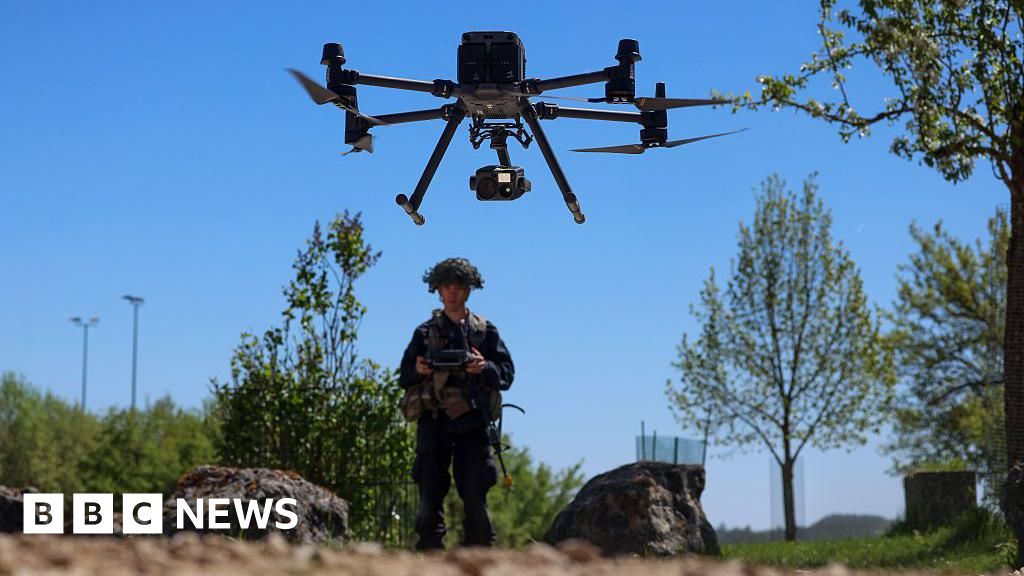
Cover image from bbc.com, which was analyzed for this article
President Trump announced plans to cut US troops in Germany 'way down' beyond initial withdrawals, alarming top Republicans who warn it sends the wrong signal to Russia. The move heightens concerns amid global tensions including the Iran war.
PoliticalOS
Sunday, May 3, 2026 — Politics
The Trump administration is accelerating a long-discussed reduction of U.S. forces in Germany as part of a larger strategic shift toward the Indo-Pacific, even as key Republicans worry it could embolden Moscow before European allies fully stand up new capabilities. Germany and NATO have responded with statements of preparedness and renewed calls for higher European spending, which is already rising. The single most important reality is that this is not a sudden abandonment but a continuation of policy tensions that predate the current Iran disputes: how much American blood and treasure should underwrite European security when those allies are finally increasing their own defense budgets.
What outlets missed
Both BBC and Newsmax underplayed the Pentagon's explicit rationale that the cuts stem from a formal review of shifting theater requirements, especially the long-term U.S. pivot toward containing China in the Indo-Pacific. The articles gave minimal attention to the fact that withdrawing 5,000 troops would return Germany levels close to those maintained before Russia's 2022 invasion of Ukraine, framing the move instead as either alarmingly abrupt or boldly punitive. Coverage also skimped on specifics about unaffected strategic assets such as Ramstein Air Base, which German officials described as irreplaceable for both nations, and offered little data on how Europe's recent defense spending surge (including Germany's projected 3.1 percent of GDP) might eventually offset the reductions. Finally, neither fully reconciled Trump's Iran-related grievances with the separate strategic case for reallocating forces away from a continent now spending more on its own security.
The United States is set to shrink its military footprint in Europe at a moment when Russia continues its war in Ukraine and tensions over Iran ripple across the Middle East. President Trump said Saturday the pending withdrawal from Germany will run "way down" and "a lot further than 5,000" troops, amplifying a Pentagon announcement that had already drawn sharp pushback from senior Republicans who warn it could weaken deterrence. The central tension now facing Washington and its allies is whether these reductions represent a overdue rebalancing of burdens and strategic priorities or a premature retreat that leaves Europe more exposed.
The Pentagon disclosed the initial cut of 5,000 troops on Friday, according to spokesman Sean Parnell. He described the decision as the product of a thorough review that accounts for theater requirements and conditions on the ground, with completion expected over the next six to twelve months. The United States currently stations more than 36,000 active-duty troops in Germany, far more than the roughly 12,600 in Italy or 3,800 in Spain. Trump, speaking to reporters, indicated the reductions could extend to Italy and Spain as well, citing their limited support during the Iran conflict.
Senate Armed Services Chairman Roger Wicker and House counterpart Mike Rogers issued a joint statement expressing deep concern. They argued that prematurely reducing America's forward presence before European allies fully convert higher defense budgets into capable forces risks undermining deterrence and sending the wrong signal to Vladimir Putin. The two Republicans, both chairs of their chambers' armed services panels, urged moving the 5,000 troops eastward within Europe rather than withdrawing them from the continent. German Defense Minister Boris Pistorius told reporters the American presence in Europe remains in the interest of both countries. Foreign Minister Johann Wadephul said Berlin was prepared for reductions but emphasized that major installations such as Ramstein Air Base are not under discussion.
NATO said it is working with Washington to clarify details of the force posture adjustment. Alliance spokeswoman Allison Hart noted on X that the move underscores the need for Europe to invest more in defense and assume greater responsibility for shared security. She pointed to progress since allies committed to higher spending targets at last year's summit in The Hague. Germany, long criticized by Trump for falling short of the 2 percent of GDP NATO guideline, is now projected to reach 3.1 percent when including aid to Ukraine. Berlin plans to spend €105.8 billion on defense in 2027.
The announcement arrives amid a public rift with German Chancellor Friedrich Merz. Merz had told students that the United States appeared to lack strategy in Iran talks and that the nation was being "humiliated." Trump responded on Truth Social that Merz seemed comfortable with Iran acquiring a nuclear weapon. The troop decision followed shortly afterward. Trump has long argued that European allies freeride on American protection. He previously directed a smaller drawdown in Romania as part of a broader shift toward the Indo-Pacific.
Reactions split along predictable lines. Some Republican voices backed the administration's emphasis on burden-sharing. Democrats, according to one outlet, called the move untethered from coherent strategy, though those specific remarks could not be independently verified across all reporting. Polish Prime Minister Donald Tusk's reported warning about alliance disintegration tied to the cuts also lacked immediate corroboration in multiple sources. What is clear is that the 32-member NATO alliance is watching closely. European officials stress that translating recent spending pledges into real military capability will take years.
The cuts would bring U.S. troop levels in Germany back near pre-2022 figures, before Russia's full-scale invasion of Ukraine prompted a temporary buildup. Pentagon officials have described the adjustment as aligned with evolving global demands rather than punishment alone. Yet the timing, layered atop disputes over Iran policy and new U.S. tariffs on European vehicles rising from 15 to 25 percent, has fueled perceptions of linkage. Trump has suggested he might withhold protection or forces from allies who do not support American objectives in the Strait of Hormuz or elsewhere.
Unresolved is how deeply the reductions will ultimately run and which specific units or bases will be affected. The administration has offered no detailed roadmap beyond Trump's broad statement. European leaders continue quiet diplomacy inside NATO channels while accelerating their own defense initiatives. The episode crystallizes a decade-long debate: how much American presence is required to keep the peace in Europe, and at what point does demanding more from allies cross into destabilizing pressure.
More in Politics

Federal Agents Search Omar Home in Ongoing Immigration Probe
Homeland Security agents searched the Minnesota Democrat's DC residence in a criminal probe, prompting accusations of political intimidation from Omar and Democratic leaders. Coverage spans left-leaning outlets like NPR, BBC, and The Guardian alongside right-leaning criticism from The Federalist and Daily Wire.

Trump Diesel Import Plan Draws Pushback Over Russia Ties
The weekend agreement drew bipartisan congressional pushback and criticism from Ukraine's Zelenskyy, with analysts downplaying US fuel price impacts. Right-leaning outlets like National Review, Dispatch, and Washington Examiner questioned its legality and effectiveness.

Independents Test Voter Appetite for Middle Ground in 2026 Midterms
Nearly 200 independents are running in competitive races as voters weigh ballot measures on housing costs in states like Massachusetts. Left-leaning coverage from NYT, NPR, and Guardian highlights turnout and key races while right outlets focus on GOP strategy.
Trump Rallies in Alaska, Ohio to Bolster GOP Senate Candidates
The president rallied in Wasilla for Sen. Dan Sullivan and faced empty seats at an Ohio event amid midterm concerns. Outlets across the spectrum covered the trips as signals of GOP vulnerability weeks before Election Day.
The Compass
You just read five takes on one story.
What's your take? Find your political shape in a few minutes.
Take the test