
Trump Endorsements Tested Against GOP Incumbents in Indiana, Ohio Primaries

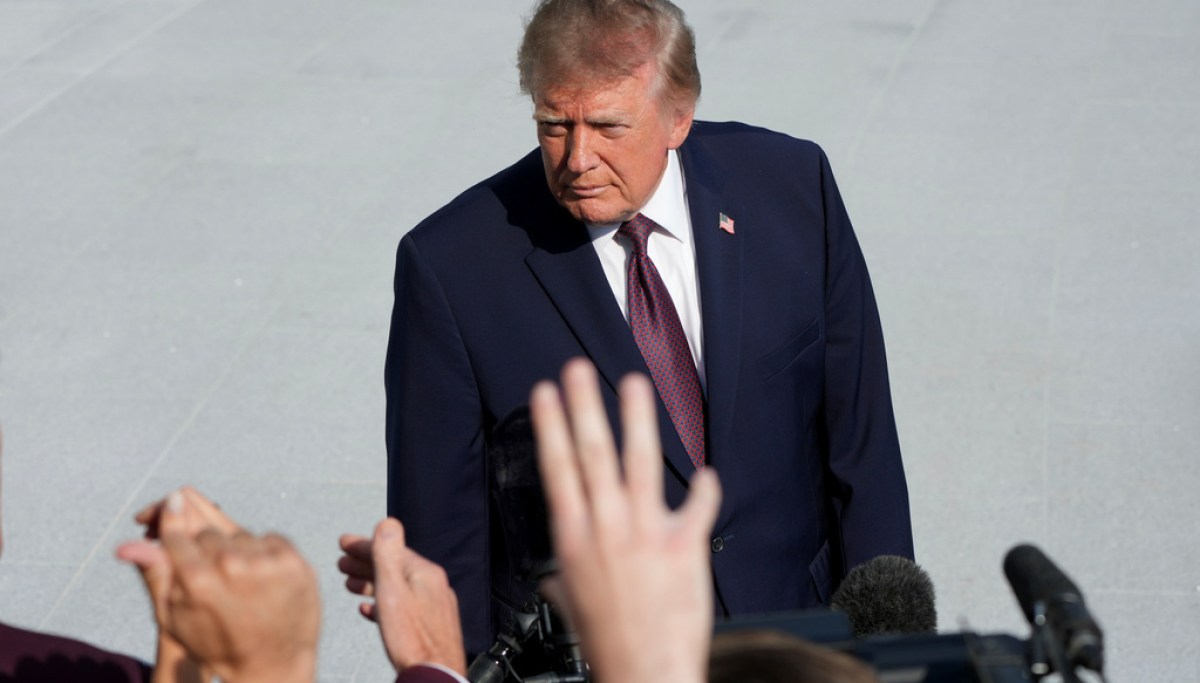
Cover image from npr.org, which was analyzed for this article
Indiana and Ohio voters went to the polls for primaries where Trump endorsed challengers to Republican incumbents who defied him on issues like redistricting. The races offer a key gauge of Trump's post-2024 sway over the party. Outcomes could foreshadow 2026 midterm battles.
PoliticalOS
Tuesday, May 5, 2026 — Politics
These primaries offer an early, imperfect gauge of Trump's ability to enforce loyalty on redistricting and related fights inside the GOP, yet local incumbency advantages, low turnout and arguments over states' rights often blunt such efforts in down-ballot races. Clear victories for endorsed challengers could signal aggressive national involvement in 2026 legislative maps, while mixed results would underscore limits even in ruby-red states. The most important reality is that structural Republican edges in Ohio and Indiana persist despite any midterm headwinds, making these contests one data point rather than a definitive verdict on party control.
What outlets missed
Most outlets framed the Indiana contests as a personality-driven test of Trump popularity or retribution but downplayed or omitted the targeted senators' explicit arguments that mid-decade redistricting violated conservative principles of states' rights and the 10th Amendment. Only scattered references noted the precise December 2025 vote tally of 31-19 against the maps, with 21 GOP no votes, which showed the opposition was broader than the seven or eight ultimately challenged. Coverage also rarely mentioned Trump's overall primary endorsement win rate hovering near 23 percent historically, or GOP base approval ratings near 85 percent in some polls, facts that temper narratives of widespread vulnerability. The Washington Examiner skipped the primaries entirely to report on unrelated Federal Reserve nominations and inflation pressures from the Iran conflict.
Voters in Indiana and Ohio head to the polls Tuesday in primaries that will measure whether President Trump's endorsements can unseat Republican state lawmakers who blocked his preferred congressional maps last year. The contests carry stakes beyond state capitols: they preview how far the president's influence reaches inside a GOP that holds slim majorities in Congress and faces a midterm map tilted by redistricting fights. At the center sits one tension. Can national pressure overcome local loyalties and arguments rooted in conservative principles of federalism?
Indiana's Republican-dominated Senate rejected a 2025 push to redraw maps that would have netted the party two additional U.S. House seats. The December vote failed 31-19, with 21 Republicans opposed, according to tallies compiled by the Indiana Capital Chronicle and Ballotpedia. Trump and allies then endorsed challengers to seven or eight of those lawmakers up for reelection this cycle. Reports on outside spending diverge. Fox News cited more than $6 million via AdImpact. NBC News put the figure at $11.8 million in the targeted races. Guardian tallies reached $7 million. The Indiana Senate Republican caucus responded with heavy funding of its own, exceeding total 2022 spending in some accounts.
Incumbents hold structural edges. Several have outraised challengers and collected endorsements from local officials and former Vice President Mike Pence, who backs one targeted senator against a Trump choice. State Sen. Spencer Deery, facing a challenge, told NPR canvassers that the effort contradicts conservative support for state sovereignty. "What is being set up here is the potential model for any party to raise ridiculous amounts of money in D.C. and then to use that to try to control the states," he said. Trump allies countered that the redistricting effort represented a top priority. Marty Obst, a consultant involved, told NPR accountability follows clear presidential signals.
Two Indiana U.S. House incumbents also face notable primaries. Republican Rep. Jim Baird, 80, has Trump's endorsement but reported $283,000 in fundraising through mid-April, per NPR's review of FEC filings. His challenger, state Rep. Craig Haggard, raised $173,000 and won backing from the state attorney general plus more than 100 local officials. Outside groups spent on both sides: one conservative PAC dropped $200,000 against Baird over his support for a bipartisan immigration measure, while a pro-crypto PAC countered with $500,000. On the Democratic side, longtime Rep. André Carson confronts multiple challengers amid calls for new leadership in the district.
Ohio's ballot offers fewer intraparty surprises but sets the table for competitive fall races. Biotech entrepreneur Vivek Ramaswamy, endorsed by Trump and the state party, is heavily favored to win the Republican nomination for governor over a lone long-shot challenger. He will face Democrat Amy Acton, former state health director, who runs unopposed. The state's Senate primary is likewise quiet. Appointed Republican Sen. Jon Husted faces no opposition. Democrat Sherrod Brown, seeking a comeback after his 2024 loss, holds a nominal challenger with minimal funds. The fall matchup could help decide Senate control; Ohio has trended Republican, with Trump winning by 11 points in 2024, yet Democrats see an opening in midterm dynamics.
House races add texture. In the newly drawn 9th District, five Republicans compete to challenge Democratic Rep. Marcy Kaptur, the longest-serving woman in Congress. Kaptur won her 2024 race by roughly half a percentage point in boundaries that would have favored Trump by nearly 11 points, according to Statehouse News Bureau reporting cited across outlets. The redrawn map tilts further right. Leading contenders include former state Rep. Derek Merrin, her prior opponent, along with state Rep. Josh Williams, former ICE official Madison Sheahan and others. Trump has not endorsed here. Separate primaries will set nominees against Democratic Reps. Greg Landsman and Emilia Sykes, whose districts shifted in opposite partisan directions under the court-ordered redraw.
These votes arrive days after a Supreme Court ruling that narrowed Section 2 of the Voting Rights Act, potentially easing future map changes in Southern states. Ohio's own maps evolved through years of litigation and a 2021 constitutional amendment requiring bipartisan support. Indiana's failed effort underscored limits on mid-decade maneuvers. Early voting in Ohio showed Democrats casting more ballots than Republicans by an 11 percent margin, per the secretary of state's office, though NPR's figure awaits full corroboration.
Outcomes will not rewrite national maps overnight. State Senate races draw low turnout and turn on neighborhood ties as much as presidential cues. Trump's historical primary endorsement success rate sits near 23 percent, per Ballotpedia data. Yet clear wins for his slate could embolden similar interventions ahead of 2026, when every House seat and dozens of governorships return to voters. Losses might reinforce that even in red states, loyalty tests meet resistance when framed as Washington interference in local affairs. The results will land as one data point in a larger contest over the party's direction, one race at a time.
More in Politics

Federal Agents Search Omar Home in Ongoing Immigration Probe
Homeland Security agents searched the Minnesota Democrat's DC residence in a criminal probe, prompting accusations of political intimidation from Omar and Democratic leaders. Coverage spans left-leaning outlets like NPR, BBC, and The Guardian alongside right-leaning criticism from The Federalist and Daily Wire.

Trump Diesel Import Plan Draws Pushback Over Russia Ties
The weekend agreement drew bipartisan congressional pushback and criticism from Ukraine's Zelenskyy, with analysts downplaying US fuel price impacts. Right-leaning outlets like National Review, Dispatch, and Washington Examiner questioned its legality and effectiveness.

Independents Test Voter Appetite for Middle Ground in 2026 Midterms
Nearly 200 independents are running in competitive races as voters weigh ballot measures on housing costs in states like Massachusetts. Left-leaning coverage from NYT, NPR, and Guardian highlights turnout and key races while right outlets focus on GOP strategy.
Trump Rallies in Alaska, Ohio to Bolster GOP Senate Candidates
The president rallied in Wasilla for Sen. Dan Sullivan and faced empty seats at an Ohio event amid midterm concerns. Outlets across the spectrum covered the trips as signals of GOP vulnerability weeks before Election Day.
The Compass
You just read five takes on one story.
What's your take? Find your political shape in a few minutes.
Take the test