
Trump Accuses NYC Mayor Mamdani of Destroying City with Taxes and Equity Plan
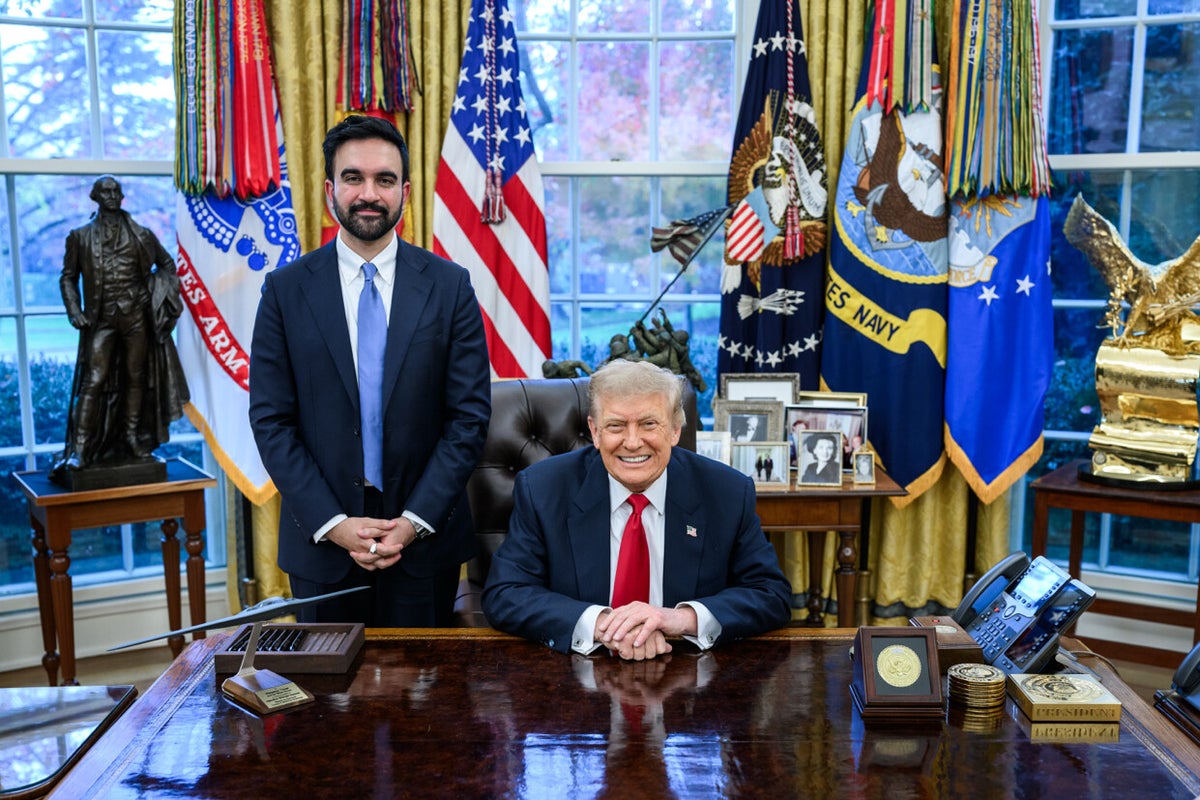
Cover image from independent.co.uk, which was analyzed for this article
Trump lambasted NYC Mayor Zohran Mamdani for 'destroying' the city via high taxes and DEI initiatives, including government-run grocery stores. Right-leaning sources call the ideas 'bonkers' and dangerous. Mamdani discussed Democratic futures amid the feud.
PoliticalOS
Friday, April 17, 2026 — Politics
New York City's new mayor is attempting to tackle entrenched affordability and racial equity problems through higher taxes on the wealthy, city-run grocery stores in food-scarce neighborhoods, and a voter-mandated equity framework applied to government operations. President Trump and conservative critics argue these steps repeat failed big-government experiments and will drive more residents and businesses away. The single most important reality is that the equity document remains preliminary, many of the most alarming interpretations have not been corroborated in the source material, and measurable outcomes on prices, migration and child safety will ultimately decide which approach prevails.
What outlets missed
Most coverage omitted that the racial equity plan is not a set of immediate binding rules but a high-level framework required by a 2022 voter referendum passed by New Yorkers themselves, with final policies still subject to 30 days of public input from all residents. Outlets also underplayed the scale of the inherited fiscal shortfall Mamdani faces, including $12 billion in previously unaccounted obligations that help explain the push for new revenue from high earners and luxury properties. The pre-existing nature of NYC's population decline and grocery-price inflation since 2020 received little context, as did the documented food-desert conditions in target areas like East Harlem that the municipal store pilot explicitly aims to address. Finally, several alarming operational details highlighted in conservative commentary, including precise salary adjustments by race or formal discouragement of child-abuse reporting, do not appear in the publicly released 375-page document and were not corroborated by other reporting.
New Yorkers squeezed by the nation's highest living costs now face a sharpening clash over remedies that could reshape daily life in the city. President Donald Trump has denounced Mayor Zohran Mamdani's tax increases on the wealthy and sweeping racial equity initiatives as policies that are "DESTROYING" New York, warning on Truth Social that they will accelerate resident flight and fail historically. The broadside came days after Mamdani's administration detailed a preliminary citywide racial equity plan and a pilot program for city-owned grocery stores, moves intended to address affordability gaps that have widened along racial lines.
The equity document, a 375-page framework released April 6 and open for 30 days of public comment, fulfills a 2022 voter-approved city charter referendum requiring agencies to embed racial equity analysis across operations. It directs city government to consider group identities in hiring, promotions, resource allocation, procurement, policy design and land-use decisions. Chief Equity Officer Afua Atta-Mensah stated the plan centers equity in how the city supports its workforce and delivers services. Conservative critics, including a New York Post opinion column by Betsy McCaughey, described the approach as creating a "citywide caste system" that prioritizes race over merit, with claims it would adjust salaries for 100 percent pay equity by race and gender, bar White-led nonprofits from contracts, and issue new guidelines discouraging child-abuse reports in Black and Hispanic families because of disproportionate referral rates. Those specific directives could not be independently verified in the released plan document, which instead outlines high-level goals across seven domains including economy, housing and community safety; separate data from the city comptroller and CDC show grocery prices rose 56 percent citywide from 2012-2023 and that Black children face elevated maltreatment death rates, though exact multiples vary by source.
Mamdani's municipal grocery initiative targets food-access gaps in neighborhoods like East Harlem, where the first 9,000-square-foot city-owned store at the historic La Marqueta site is slated to open in 2029 after ground-up construction. The administration plans one store per borough by the end of the mayor's first term at an estimated $30 million per location for the initial build, arguing public ownership can cut costs passed to consumers after a decade in which local grocery inflation outpaced the national average. Opponents counter that the root problem lies in zoning rules that require special permits for supermarkets over 10,000 square feet in manufacturing districts, thin industry profit margins of 1-3 percent, and high property taxes that have already driven bodega closures. Past government-run food efforts in other countries have produced shortages, a point emphasized in a Townhall column that invoked Soviet-era empty shelves.
The policy fight revived an on-again, off-again feud between Trump and Mamdani. During last year's mayoral campaign Trump labeled the Democratic Socialist candidate a "100% Communist Lunatic" and threatened to withhold federal funds. Their November White House meeting after Mamdani defeated Andrew Cuomo was notably cordial, with Trump saying he hoped Mamdani would become "a really great mayor" and the two discussing housing, rent, groceries and utilities. Mamdani called the session productive and focused on delivering affordability for 8.5 million residents. A second meeting followed Trump's State of the Union criticism of the "new communist mayor." The latest Trump post expressed disbelief that federal dollars should prop up what he called doomed tax-and-spend policies.
Mamdani has tied the initiatives to a companion "True Cost of Living Measure" report that links persistent racial disparities to unaffordable rents, food and utilities. His administration inherited a projected $5.4 billion budget gap for fiscal 2027 stemming from prior obligations. Outmigration from New York City predates Mamdani; the city lost roughly 200,000 residents since 2020 amid high costs, with IRS data showing billions in adjusted gross income leaving the state over the prior decade. Whether the new measures will reverse those trends or intensify them remains the central unresolved question. The equity plan's final form will depend on public feedback and agency implementation. Major corporations have recently scaled back corporate DEI programs, citing Supreme Court rulings against race-based preferences in education and employment, adding legal uncertainty to similar government efforts.
Reactions split along familiar lines. Right-leaning outlets warned of reverse discrimination, heightened risks to children, and Soviet-style inefficiency. Other coverage noted the plan's preliminary, consultative nature and Mamdani's grassroots campaign promise to level the economic playing field. The mayor has continued to frame the agenda as essential economic justice while navigating the renewed national spotlight from Trump.
More in Politics

Federal Agents Search Omar Home in Ongoing Immigration Probe
Homeland Security agents searched the Minnesota Democrat's DC residence in a criminal probe, prompting accusations of political intimidation from Omar and Democratic leaders. Coverage spans left-leaning outlets like NPR, BBC, and The Guardian alongside right-leaning criticism from The Federalist and Daily Wire.

Trump Diesel Import Plan Draws Pushback Over Russia Ties
The weekend agreement drew bipartisan congressional pushback and criticism from Ukraine's Zelenskyy, with analysts downplaying US fuel price impacts. Right-leaning outlets like National Review, Dispatch, and Washington Examiner questioned its legality and effectiveness.

Independents Test Voter Appetite for Middle Ground in 2026 Midterms
Nearly 200 independents are running in competitive races as voters weigh ballot measures on housing costs in states like Massachusetts. Left-leaning coverage from NYT, NPR, and Guardian highlights turnout and key races while right outlets focus on GOP strategy.
Trump Rallies in Alaska, Ohio to Bolster GOP Senate Candidates
The president rallied in Wasilla for Sen. Dan Sullivan and faced empty seats at an Ohio event amid midterm concerns. Outlets across the spectrum covered the trips as signals of GOP vulnerability weeks before Election Day.
The Compass
You just read five takes on one story.
What's your take? Find your political shape in a few minutes.
Take the test