
Trump Endorsements Oust 5 Indiana GOP Senators, Ramaswamy Wins Ohio Primary
Cover image from redstate.com, which was analyzed for this article
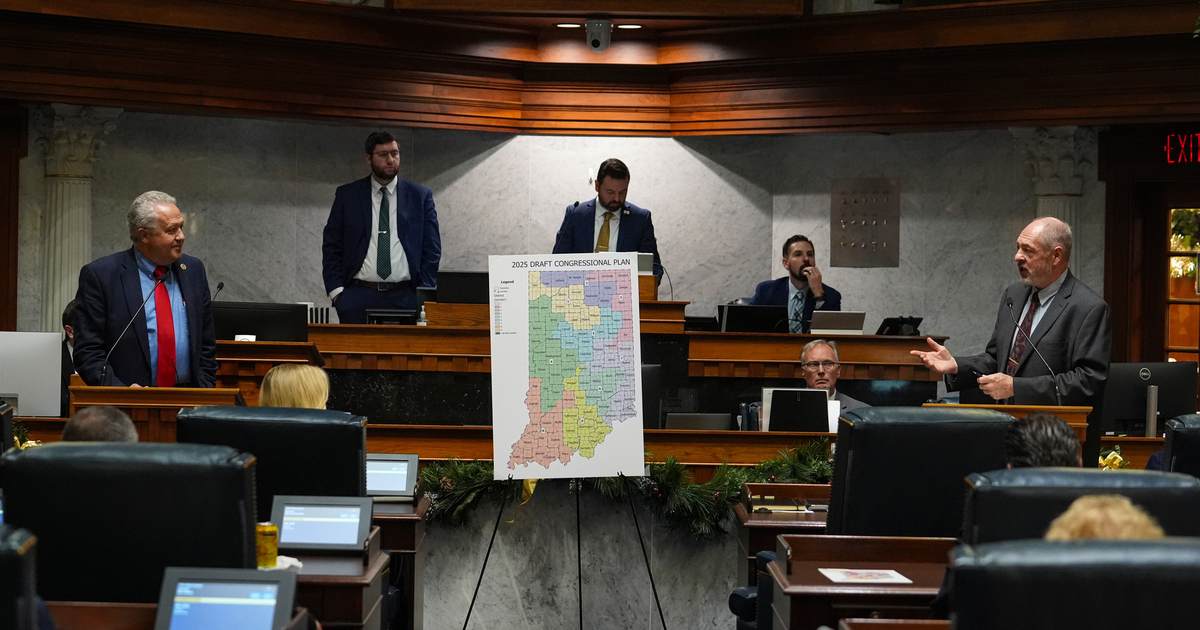
Trump-endorsed challengers ousted five Indiana GOP state senators opposing his redistricting stance, while Vivek Ramaswamy won the Ohio governor Republican primary. The victories underscore Trump's strong hold on the GOP base ahead of midterms. Democratic turnout showed enthusiasm in Ohio.
PoliticalOS
Wednesday, May 6, 2026 — Politics
Trump's endorsements proved decisive in ousting five of seven targeted Indiana Republican state senators who blocked his mid-decade redistricting plan, reinforcing his hold on the party base ahead of midterms. Heavy spending by allies and procedural disputes over when maps can legally change formed key backdrop details often underplayed. The landslide win by Vivek Ramaswamy in Ohio further signals alignment with Trump's wing of the GOP, though general election dynamics against energized Democrats remain unresolved.
What outlets missed
Most outlets underplayed the legal argument cited by Indiana incumbents: state law generally restricts redistricting to the decennial census cycle, a point raised by more than 20 GOP senators who joined Democrats in the December 2025 rejection. The $8.3 million spent by Trump allies and allied super PACs received inconsistent attention, as did the fact that a non-endorsed challenger also defeated an incumbent who opposed redistricting. Details on Ramaswamy's $25 million self-loan and the full Ohio Democratic primary context, including Acton's unopposed path and Brown's separate Senate win, were often minimized or separated from the Trump narrative. Bomb threats reported against some Indiana senators before the redistricting vote appeared in only a subset of coverage and could not be independently verified across all sources.
Republican voters in two Midwestern states delivered clear victories to candidates aligned with President Donald Trump on Tuesday, reshaping state legislative contests in Indiana and setting the stage for a high-profile gubernatorial race in Ohio. The results carry immediate stakes for control of Congress in the 2026 midterms and for the direction of the GOP, as incumbents who resisted Trump's push for new congressional maps paid a price at the ballot box.
At the center of the Indiana contests stood one unresolved tension: whether Republican lawmakers could defy the president on procedural grounds without losing their seats. Last December, more than 20 GOP state senators joined Democrats to reject a mid-decade redistricting plan that would have altered maps outside the normal census cycle, according to reports from PBS and The Associated Press. Trump and allies viewed the maps as essential to bolstering Republican House margins. The seven incumbents who opposed it then faced Trump-endorsed challengers in Tuesday's primaries.
Five of those challengers won. Trevor De Vries took 75.1 percent against incumbent Daniel Dernulc in District 1, per Indiana Election Division unofficial results. Brian Schmutzler defeated Linda Rogers 55.8 percent to 44.2 percent. Blake Fiechter beat Travis Holdman 61.5 percent to 38.5 percent. Tracey Powell led Jim Buck 64.7 percent to 35.3 percent. Michelle Davis topped Greg Walker 58.8 percent to 41.2 percent. Paula Copenhaver declared victory in a virtual tie with Spencer Deery that will require provisional ballots to resolve. Brenda Wilson lost to Greg Goode. A separate non-endorsed challenger, Jay Starkey, also defeated incumbent Rich Niemeyer.
Allies of Trump and Gov. Mike Braun spent at least $8.3 million on the Indiana races, according to AP and Ohio Capital Journal tallies. Incumbents cited state rules limiting redistricting to once per decade following the census; some described heavy pressure from the White House, including visits by Vice President JD Vance. Defeated Sen. Travis Holdman told reporters he followed constituent wishes and accepted the outcome. Sen. Jim Banks, a Trump ally, called it a "big night for MAGA in Indiana."
In Ohio, Vivek Ramaswamy secured the Republican nomination for governor with 82.47 percent of the vote against Casey Putsch, according to the Ohio Secretary of State. Trump had endorsed Ramaswamy, praising him as "something SPECIAL" in a statement released Tuesday. Ramaswamy, who ran against Trump in the 2024 presidential primary before aligning with his agenda and briefly helping lead federal efficiency efforts, will face Democrat Amy Acton in November. Acton won her primary unopposed.
The Ohio results also saw former Sen. Sherrod Brown capture the Democratic Senate nomination, setting up an expensive general election against appointed Sen. Jon Husted. Brown has raised roughly twice as much as Husted so far. Democratic turnout in the state showed signs of energy, though final figures were still being tallied.
Taken together, the primaries tested Trump's reach within the party he continues to lead. The Indiana outcomes suggest that crossing him on key priorities carries risk even in low-profile legislative races. Yet spending played a documented role, and at least one Trump-endorsed candidate fell short. Questions remain about how these shifts will translate to November, when map changes, if any, could influence House margins in a state Trump has carried decisively in recent elections.
More in Politics

Federal Agents Search Omar Home in Ongoing Immigration Probe
Homeland Security agents searched the Minnesota Democrat's DC residence in a criminal probe, prompting accusations of political intimidation from Omar and Democratic leaders. Coverage spans left-leaning outlets like NPR, BBC, and The Guardian alongside right-leaning criticism from The Federalist and Daily Wire.

Trump Diesel Import Plan Draws Pushback Over Russia Ties
The weekend agreement drew bipartisan congressional pushback and criticism from Ukraine's Zelenskyy, with analysts downplaying US fuel price impacts. Right-leaning outlets like National Review, Dispatch, and Washington Examiner questioned its legality and effectiveness.

Independents Test Voter Appetite for Middle Ground in 2026 Midterms
Nearly 200 independents are running in competitive races as voters weigh ballot measures on housing costs in states like Massachusetts. Left-leaning coverage from NYT, NPR, and Guardian highlights turnout and key races while right outlets focus on GOP strategy.
Trump Rallies in Alaska, Ohio to Bolster GOP Senate Candidates
The president rallied in Wasilla for Sen. Dan Sullivan and faced empty seats at an Ohio event amid midterm concerns. Outlets across the spectrum covered the trips as signals of GOP vulnerability weeks before Election Day.
The Compass
You just read five takes on one story.
What's your take? Find your political shape in a few minutes.
Take the test