
US-Iran Clashes in Hormuz Test Fragile Ceasefire as Oil Prices Surge
Cover image from foxnews.com, which was analyzed for this article
US forces under Project Freedom escorted commercial ships through the Strait of Hormuz, firing on and destroying Iranian boats that threatened protected vessels. Iran attacked a UAE oil facility and proposed a ceasefire for sanctions relief and US withdrawal, but Trump rejected it insisting on American terms. The exchanges test the fragile truce as a 60-day war powers deadline nears and oil prices fluctuate.
PoliticalOS
Tuesday, May 5, 2026 — Politics
The Strait of Hormuz has become the focal point of a dangerous test between U.S. insistence on freedom of navigation backed by military force and Iran's leverage through closure and limited strikes, all within a ceasefire both sides accuse the other of violating. Diplomatic proposals exist but remain stalled on irreconcilable demands over sanctions, withdrawals and regional security guarantees. Readers should recognize that while initial transits have occurred, scaling safe commercial traffic without triggering wider war remains unproven and oil-market volatility will continue until one side blinks or a compromise is reached.
What outlets missed
Most coverage omitted or downplayed the specific U.S. naval blockade of Iranian ports imposed on April 13, which CENTCOM confirmed had turned back dozens of vessels and which Iran repeatedly cited as the trigger for fully sealing the strait and its subsequent attacks. Iran's detailed 14-point ceasefire proposal, including timelines for sanctions relief within 30 days and linkage to Israeli actions in Lebanon, received only passing mention in a few skeptical outlets while the U.S. rejection on "American terms" was rarely paired with the full list of Iranian conditions. The approaching 60-day war powers resolution deadline in Congress, which could force a formal vote on continued operations, was almost entirely absent despite its potential to shift domestic political leverage. Independent verification status of Iranian civilian casualty claims from the fast-boat strikes and precise Fujairah damage assessments also went unaddressed, leaving readers without clear guidance on what remains corroborated across governments and shipping data.
Global energy markets shuddered and thousands of seafarers remained stranded as fresh naval clashes erupted in the Strait of Hormuz this week. The confrontation pits U.S. efforts to escort commercial vessels through the blocked chokepoint against Iranian resistance, raising the immediate risk that a tenuous April ceasefire collapses into renewed open conflict. At stake: one-fifth of the world's seaborne oil trade, already driving benchmark Brent crude above $110 per barrel and U.S. gasoline prices toward $4.50 a gallon.
The operation, designated Project Freedom by U.S. Central Command, began Monday with guided-missile destroyers, over 100 aircraft, unmanned systems and roughly 15,000 personnel establishing what Adm. Brad Cooper described as a layered defensive umbrella rather than one-by-one convoys. CENTCOM stated that two U.S.-flagged merchant vessels completed transit uneventfully, a claim corroborated by shipping firm Maersk for its vessel Alliance Fairfax but rejected outright by Iran's Islamic Revolutionary Guard Corps as "baseless." Iranian forces responded with cruise missiles, drones and small boats targeting both commercial traffic and U.S. Navy assets, according to multiple U.S. briefings. American helicopters sank six Iranian fast boats that CENTCOM said were actively threatening civilian ships; Iran countered that the struck vessels were civilian craft carrying passengers and goods, with state media Tasnim reporting five civilian deaths. That casualty figure could not be independently verified in reporting from other outlets.
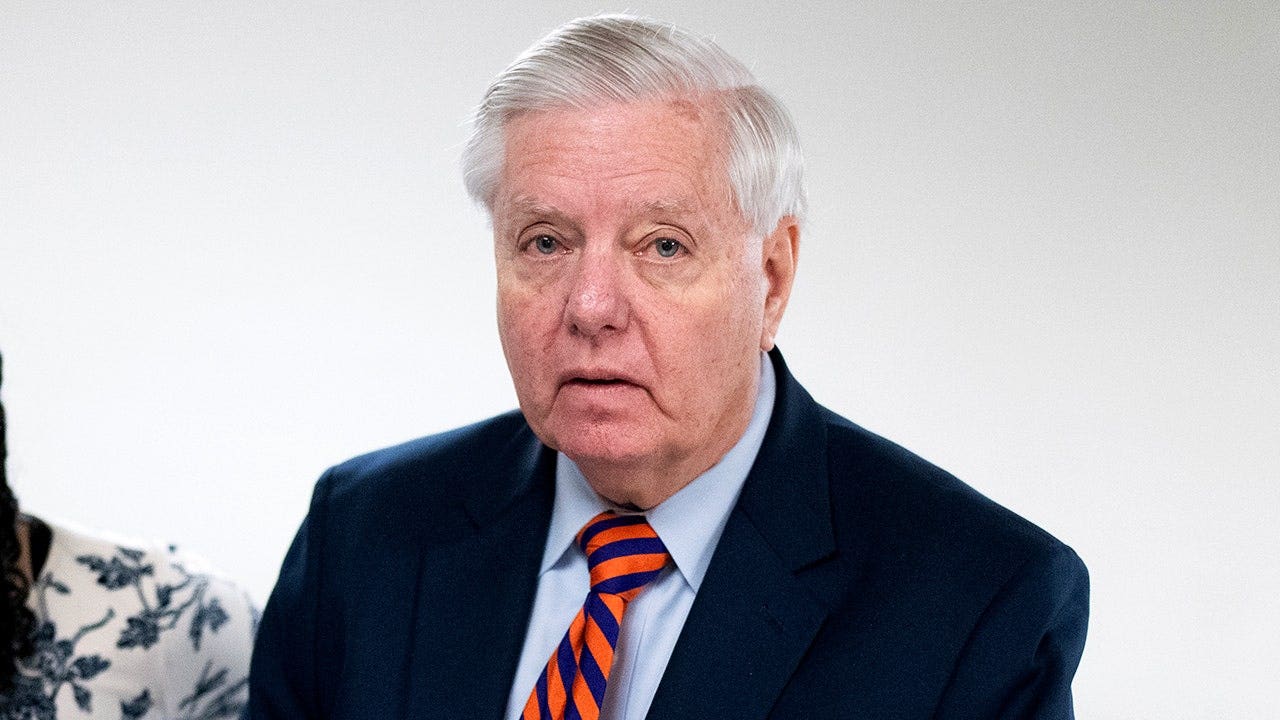
The exchanges form the core unresolved tension: Iran views the U.S. escort mission and its ongoing naval blockade of Iranian ports, in place since mid-April, as violations of the ceasefire brokered by Pakistan. Tehran has proposed a 14-point framework that would lift U.S. sanctions, end the blockade, secure American withdrawal from the region and halt Israeli operations in Lebanon. President Trump, speaking over the weekend, dismissed the terms as unacceptable, insisting any deal must occur on American conditions. Sen. Lindsey Graham, appearing on Fox News, defined victory narrowly as restoring freedom of navigation, delivering a "big, strong and short" further degradation of Iranian military capacity, threatening Kharg Island from the air if needed, then pivoting to renewed Saudi-Israeli normalization talks. Graham's remarks drew immediate online criticism for describing a return to pre-war conditions as success.
Iran struck a UAE-linked tanker in the strait and launched missiles and drones toward Emirati territory, according to UAE officials. Air defenses intercepted most of the barrage, but one impact sparked a fire at the Fujairah oil storage facility, injuring three Indian nationals. UAE authorities called the action a "dangerous escalation." International reaction was swift: French President Emmanuel Macron labeled the strikes "unjustified," British Prime Minister Keir Starmer pledged continued defense support for Gulf partners, German Chancellor Friedrich Merz demanded Tehran return to negotiations, and Saudi Arabia urged Iran to observe "good neighborliness." Qatar and the broader Gulf Cooperation Council echoed the condemnations. Oman reported two injuries from a residential strike near the strait. South Korea confirmed an incident involving one of its cargo vessels but has not yet committed forces to the U.S. mission despite Trump's public suggestion.
The original war commenced with U.S.-Israeli airstrikes on February 28 that Iran says killed senior leaders; Tehran retaliated by closing the strait, trapping an estimated 2,000 vessels and 20,000 crew according to the International Maritime Organization. A brief April reopening gave way to full closure again after the U.S. blockade tightened. Negotiations have produced little movement. Iran's Foreign Minister Abbas Araghchi stated there is "no military solution to a political crisis" and warned both Washington and Abu Dhabi against being dragged into a quagmire. Trump has threatened overwhelming retaliation against any direct strike on U.S. vessels, including rhetoric that any such attack would leave Iran "blown off the face of the earth."
Oil markets reacted immediately, with Brent climbing more than 5 percent at peaks before partially retreating. Shipping insurers have grown wary; industry representatives told BBC there is no formal convoy system, leaving questions about who communicates with Iranian authorities during transits and what happens if a vessel is challenged. Retired Marine Col. Ray Gerber noted limited independent evidence of scaled commercial traffic resuming and questioned whether mine threats in the corridor have been fully addressed. A 60-day congressional war powers clock is ticking, adding domestic pressure on the administration to define the mission's legal boundaries and duration.
Neither side has signaled willingness to compromise core demands. The U.S. maintains its actions defend freedom of navigation and protect neutral shipping. Iran insists its closure and responses enforce sovereignty over the waterway it has long claimed the right to regulate. As additional vessels test the corridor and diplomats continue back-channel talks, the narrow strait once again concentrates the world's economic and military anxieties into a single contested passage.
More in Politics

Federal Agents Search Omar Home in Ongoing Immigration Probe
Homeland Security agents searched the Minnesota Democrat's DC residence in a criminal probe, prompting accusations of political intimidation from Omar and Democratic leaders. Coverage spans left-leaning outlets like NPR, BBC, and The Guardian alongside right-leaning criticism from The Federalist and Daily Wire.

Trump Diesel Import Plan Draws Pushback Over Russia Ties
The weekend agreement drew bipartisan congressional pushback and criticism from Ukraine's Zelenskyy, with analysts downplaying US fuel price impacts. Right-leaning outlets like National Review, Dispatch, and Washington Examiner questioned its legality and effectiveness.

Independents Test Voter Appetite for Middle Ground in 2026 Midterms
Nearly 200 independents are running in competitive races as voters weigh ballot measures on housing costs in states like Massachusetts. Left-leaning coverage from NYT, NPR, and Guardian highlights turnout and key races while right outlets focus on GOP strategy.
Trump Rallies in Alaska, Ohio to Bolster GOP Senate Candidates
The president rallied in Wasilla for Sen. Dan Sullivan and faced empty seats at an Ohio event amid midterm concerns. Outlets across the spectrum covered the trips as signals of GOP vulnerability weeks before Election Day.
The Compass
You just read five takes on one story.
What's your take? Find your political shape in a few minutes.
Take the test