
Mid-Decade Redistricting Wars Threaten to Reshape 2026 House Control
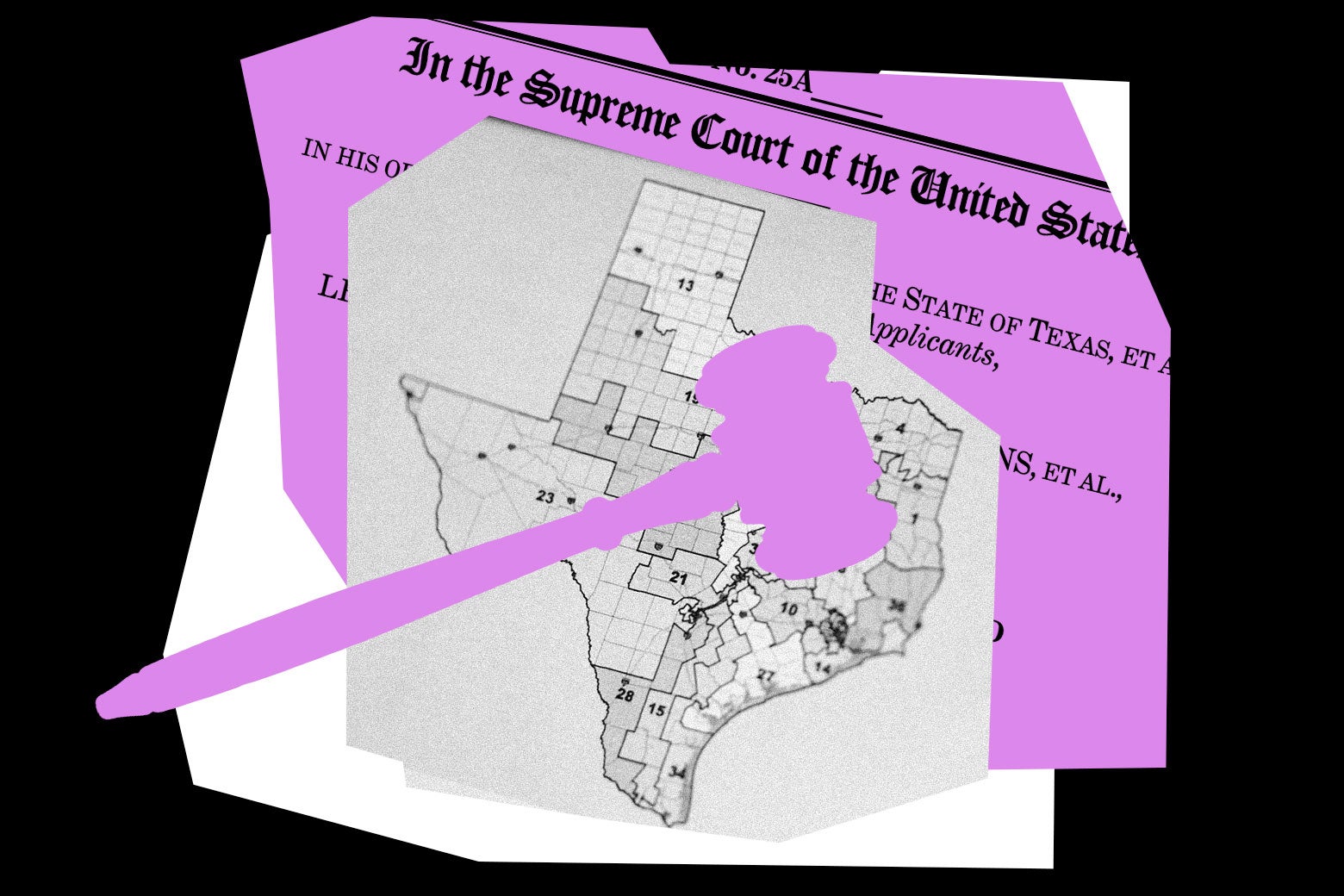
Cover image from slate.com, which was analyzed for this article
Ongoing state-level redistricting battles, including in Florida, could rig maps and shift House control amid partisan fights. Critics decry racial gerrymandering even Trump judges rejected. Power dynamics eyed for midterms.
PoliticalOS
Wednesday, April 29, 2026 — Politics
Both parties are redrawing congressional maps mid-decade wherever they hold legislative power, producing modest net Republican gains for 2026 if current plans survive court challenges. The Supreme Court has largely immunized partisan gerrymandering from federal review while still policing overt racial vote dilution, though the line between the two remains contested and litigation will continue. The single most important reality is that these state-level decisions, not national votes, may determine House control for the remainder of the decade.
What outlets missed
Most coverage omitted the 2-1 split in the Texas lower court, where a Reagan-appointed judge dissented and accused the majority of judicial overreach; the Supreme Court itself later flagged 'at least two serious errors' in the panel's reasoning. The Department of Justice letter that triggered Texas's redraw cited prior unconstitutional racial gerrymandering in the 2021 maps, a corrective context downplayed in favor of portraying the move as purely Trump-driven partisanship. Outlets also underplayed historical precedents for mid-decade redistricting, documented by the Congressional Research Service as far back as the 19th century, which normalize the practice even if its current volume is elevated. Finally, the pending Louisiana v. Callais case, which could reshape Voting Rights Act enforcement nationwide, received only glancing mention despite its potential to alter legal incentives in Florida and elsewhere.
A single-digit House majority stands on shifting ground. With Republicans clinging to a 217-212 edge and four vacancies as of late April 2026, simultaneous redistricting efforts in at least eight states could transfer between nine and fourteen congressional seats before a single 2026 ballot is cast. The central tension is no longer whether parties will draw maps to their advantage. It is whether those maps cross from partisan strategy into unconstitutional racial line-drawing, and whether federal courts retain any meaningful power to stop it after the Supreme Court's 2019 ruling in Rucho v. Common Cause declared partisan gerrymandering beyond judicial review.
Redistricting normally follows the decennial census. In 2025, a Department of Justice letter under the Trump administration asserted that certain 2021 Texas maps had improperly considered race, prompting the state to redraw mid-decade. Texas lawmakers approved changes projected to flip the state's delegation from a 25-13 Republican advantage to 30-8 based on 2024 voting patterns, according to Cook Political Report data cited across outlets. A three-judge federal panel ruled 2-1 in November 2025 that the new map likely violated the Voting Rights Act by diluting minority voting strength in multiple districts. One member of that panel was a Trump appointee. The Supreme Court stayed the ruling in December on a 6-3 ideological split, citing the presumption of legislative good faith, then formally reversed it in April 2026 without further explanation. Justice Elena Kagan dissented, arguing the lower court had properly weighed extensive evidence.
Democrats responded in kind where they held power. California legislators overrode their state's independent redistricting commission, a step ratified by voters, aiming to convert a 43-9 Democratic margin into 48-4. Virginia voters approved a constitutional change allowing lawmakers to redraw maps, yielding a shift from 6-5 Democratic to 10-1. Missouri, North Carolina and Ohio each passed maps adding one or two Republican-leaning seats, though Ohio's compromise left three Democratic districts competitive. A federal judge in Utah imposed a map creating a new Democratic seat around Salt Lake City after rejecting the legislature's version.
Florida remains the largest unresolved piece. Governor Ron DeSantis called a special session after releasing a proposed map that could add four Republican seats, but it must navigate the state's 2010 fair-districts amendments banning partisan and racial gerrymandering. The outcome may hinge on the Supreme Court's pending decision in Louisiana v. Callais, which could narrow Voting Rights Act protections against racial vote dilution. Multiple other states considered but abandoned mid-decade changes after legislative failure, gubernatorial veto threats or court rulings.
The legal backdrop traces to Rucho. That 5-4 decision closed federal courts to claims of excessive partisanship while leaving racial gerrymandering claims intact under the 14th and 15th Amendments. Lower courts have since struggled to disentangle the two. In Texas, the district court conducted an extended trial and produced a 160-page opinion detailing map-drawing mechanics; claims of a precise nine-day proceeding and 3,000 pages of evidence could not be independently verified in other reporting. The Supreme Court's brief shadow-docket order emphasized that legislatures deserve a presumption they acted for political rather than racial reasons. Voting-rights groups have filed suits in several states, but success remains uncertain.
Both parties have defended their maps as lawful partisan advantage. Republicans point to Democratic gains in California and Virginia as proof of symmetry. Democrats counter that Republican maps in Texas and North Carolina deliberately dispersed Black and Hispanic voters to reduce Democratic performance. Public statements by individual legislators bragging about racial targets, referenced in one dissent, were not corroborated in other outlets' coverage. Historical records show mid-decade redistricting has occurred before, including repeated Ohio redraws in the late 19th century, though its current scale is unusual.
As of April 2026, the net effect if all maps survive legal scrutiny would likely favor Republicans by one to three seats once Florida acts, according to Cook Political Report projections. That margin matters in a chamber where procedural votes routinely turn on fewer than five members. Further litigation is guaranteed. The Supreme Court has signaled reluctance to supervise political mapmaking closely, yet it continues to referee racial claims case by case. Until either the Court revisits Rucho or Congress establishes national standards for independent commissions, these state-by-state battles will recur after every close election.
More in Politics

Federal Agents Search Omar Home in Ongoing Immigration Probe
Homeland Security agents searched the Minnesota Democrat's DC residence in a criminal probe, prompting accusations of political intimidation from Omar and Democratic leaders. Coverage spans left-leaning outlets like NPR, BBC, and The Guardian alongside right-leaning criticism from The Federalist and Daily Wire.

Trump Diesel Import Plan Draws Pushback Over Russia Ties
The weekend agreement drew bipartisan congressional pushback and criticism from Ukraine's Zelenskyy, with analysts downplaying US fuel price impacts. Right-leaning outlets like National Review, Dispatch, and Washington Examiner questioned its legality and effectiveness.

Independents Test Voter Appetite for Middle Ground in 2026 Midterms
Nearly 200 independents are running in competitive races as voters weigh ballot measures on housing costs in states like Massachusetts. Left-leaning coverage from NYT, NPR, and Guardian highlights turnout and key races while right outlets focus on GOP strategy.

Trump Rallies in Alaska, Ohio to Bolster GOP Senate Candidates
The president rallied in Wasilla for Sen. Dan Sullivan and faced empty seats at an Ohio event amid midterm concerns. Outlets across the spectrum covered the trips as signals of GOP vulnerability weeks before Election Day.
The Compass
You just read five takes on one story.
What's your take? Find your political shape in a few minutes.
Take the test