
Virginia Voters Weigh Temporary Partisan Redistricting That Could Net Democrats Four House Seats
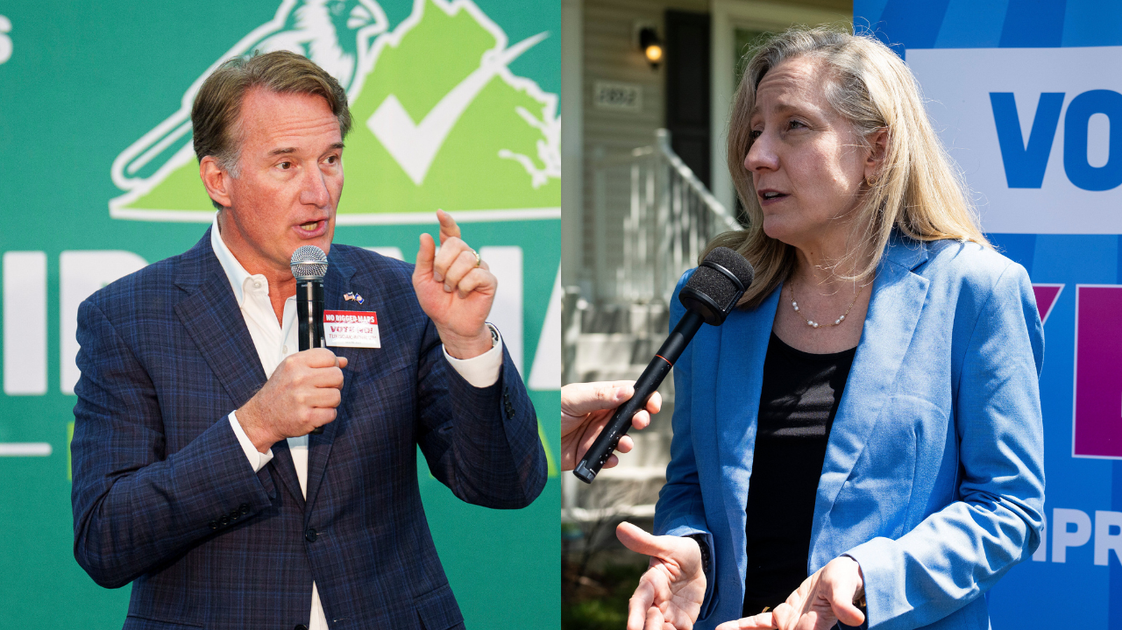
Cover image from huffpost.com, which was analyzed for this article
Virginians voted on a ballot measure to redraw congressional maps in a way that could give Democrats a significant advantage, potentially flipping multiple GOP-held seats ahead of midterms. Republicans decried it as a blatant partisan power grab countering Trump's gerrymandering efforts, while Democrats framed it as correcting unfair lines. The outcome may influence national House control and future redistricting battles.
PoliticalOS
Tuesday, April 21, 2026 — Politics
Tuesday's referendum offers Virginians a direct choice on whether the ends of offsetting Republican national redistricting gains justify temporarily suspending the independent commission they themselves created in 2020. Passage would likely deliver Democrats a decisive edge in four House races, tightening their path to majority control in 2026, yet courts could still intervene and Florida's pending moves could neutralize the math. The single clearest fact is that both parties have abandoned earlier commitments to nonpartisan map-drawing when it suits their immediate interests; voters must now decide which precedent matters more.
What outlets missed
Most coverage omitted the amendment's explicit conditional trigger: it authorizes redraws only between January 2025 and October 2030 if another state has redrawn maps for non-census, non-court reasons. This detail, available on the Virginia Department of Elections site, reframes the measure as reciprocal rather than unilateral. Outlets also underplayed the 2020 voter-approved constitutional amendment creating the bipartisan commission now being bypassed, and the precise ballot wording voters actually see, which emphasizes "restore fairness" and the temporary reversion to independent processes after 2030. Finally, few noted that dark money flowed to both sides, or that pending court rulings on compactness and process could nullify the map even after a yes vote, leaving the outcome uncertain regardless of Tuesday's tally.
Control of the narrowly divided U.S. House could shift on the strength of a single state's vote. Virginians decide Tuesday whether to amend their constitution, handing the Democrat-led legislature temporary power to redraw congressional districts before the 2026 midterms. Approval would likely transform the state's current 6-5 Democratic edge into a 10-1 advantage, flipping as many as four Republican-held seats according to analyses by the Virginia Public Access Project and Ballotpedia.
The measure arrives amid a national escalation. President Trump last year urged Republican-led states including Texas, North Carolina, Ohio and Missouri to redraw maps mid-decade for partisan gain. Democrats responded in California with their own voter-approved changes and now in Virginia, where the General Assembly has pre-approved a map anchoring five districts in Northern Virginia and extending into rural areas. One Hampton Roads district and one in the Shenandoah Valley would remain competitive based on 2024 results. The amendment activates only if another state has redrawn maps outside the decennial census or court order; it expires after 2030, reverting to the bipartisan commission voters established in 2020. Early voting exceeded 1.3 million ballots, approaching 2025 gubernatorial levels, per state figures compiled by the Virginia Public Access Project.
Spending reached at least $93 million, most of it dark money from nonprofit groups that do not disclose donors. Virginians for Fair Elections, backing the measure, raised $64 million including $40 million from House Majority Forward, a group tied to House Minority Leader Hakeem Jeffries. The opposition, led by Virginians for Fair Maps and former Attorney General Jason Miyares, raised about $19-20 million. Former President Obama appeared in yes ads; Trump, Speaker Mike Johnson and former Governor Glenn Youngkin rallied for no.
The ballot asks voters, in plain text: Should the Constitution of Virginia be amended to allow the General Assembly to temporarily adopt new congressional districts to restore fairness in the upcoming elections, while ensuring Virginia's standard redistricting process resumes for all future redistricting after the 2030 census? Republicans call the language misleading and the map an attack on rural representation. Democrats describe it as the only available counter to Republican gains elsewhere. Public polls, including one from The Washington Post-Schar School, showed yes leading narrowly among likely voters, though turnout in this off-year contest remains uncertain.
The Virginia Supreme Court permitted the referendum to proceed while weighing Republican legal challenges on process and compactness; a ruling could still invalidate results. Even if the map takes effect, Florida's planned special session later in April could add Republican seats, keeping the national math fluid. The central tension remains unresolved: whether voters will accept partisan lines drawn by politicians to offset similar moves by the other side, or insist on the independent process they approved six years ago. A yes vote would give Democrats a slight national edge heading into midterms. A no vote would preserve the status quo and hand Republicans a defensive win in a state that has trended blue.
More in Politics

Federal Agents Search Omar Home in Ongoing Immigration Probe
Homeland Security agents searched the Minnesota Democrat's DC residence in a criminal probe, prompting accusations of political intimidation from Omar and Democratic leaders. Coverage spans left-leaning outlets like NPR, BBC, and The Guardian alongside right-leaning criticism from The Federalist and Daily Wire.

Trump Diesel Import Plan Draws Pushback Over Russia Ties
The weekend agreement drew bipartisan congressional pushback and criticism from Ukraine's Zelenskyy, with analysts downplaying US fuel price impacts. Right-leaning outlets like National Review, Dispatch, and Washington Examiner questioned its legality and effectiveness.

Independents Test Voter Appetite for Middle Ground in 2026 Midterms
Nearly 200 independents are running in competitive races as voters weigh ballot measures on housing costs in states like Massachusetts. Left-leaning coverage from NYT, NPR, and Guardian highlights turnout and key races while right outlets focus on GOP strategy.
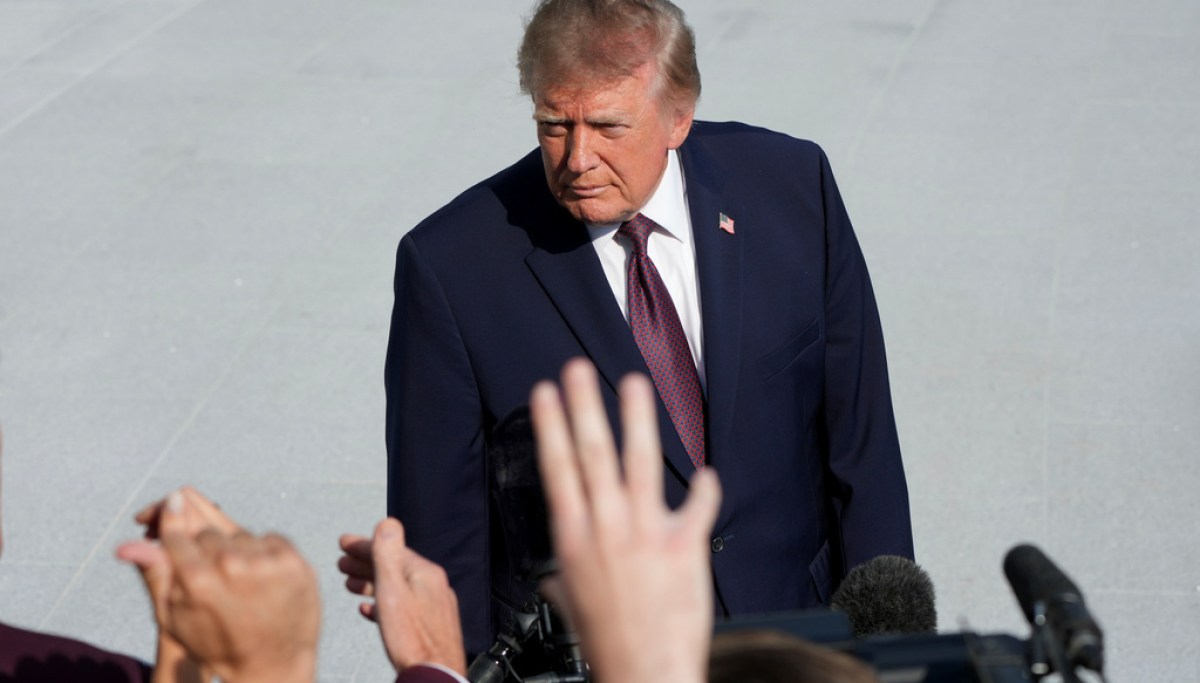
Trump Rallies in Alaska, Ohio to Bolster GOP Senate Candidates
The president rallied in Wasilla for Sen. Dan Sullivan and faced empty seats at an Ohio event amid midterm concerns. Outlets across the spectrum covered the trips as signals of GOP vulnerability weeks before Election Day.
The Compass
You just read five takes on one story.
What's your take? Find your political shape in a few minutes.
Take the test