
Virginia Voters Decide Fate of Mid-Decade Redistricting in Tight Vote
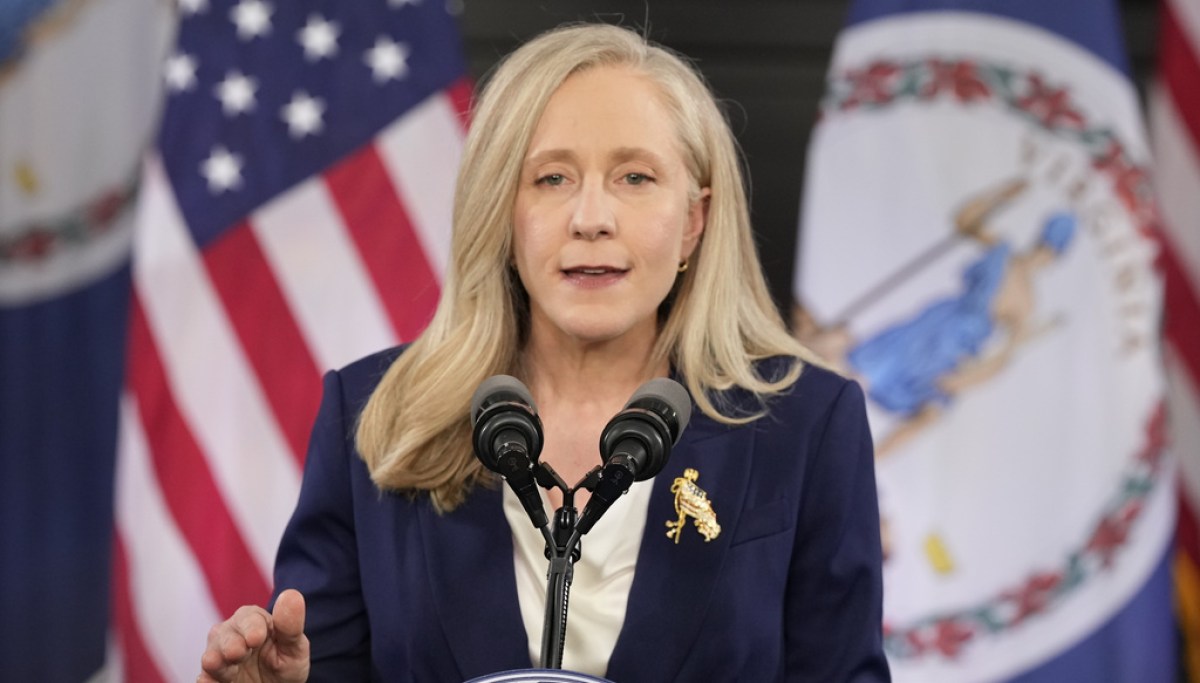
Cover image from washingtonexaminer.com, which was analyzed for this article
A key redistricting vote in Virginia is hailed as critical for the swing state's future. Republicans decry a Spanberger-backed gerrymander as risking the state's congressional clout. The battle underscores national stakes in electoral map changes.
PoliticalOS
Sunday, April 19, 2026 — Politics
Virginia voters are being asked to temporarily suspend a voter-approved independent redistricting system adopted just six years ago in order to counter similar partisan moves in other states. The choice pits short-term partisan advantage and national House control against the risk of reduced federal influence, lost seniority on key committees, and erosion of recent anti-gerrymandering reforms. Whatever the result, the referendum marks another escalation in a tit-for-tat map war that now directly affects how power is distributed in Congress through the end of the decade.
What outlets missed
Both outlets underplayed the 2020 constitutional amendment's landslide 66-percent approval and the precise mechanics of the independent commission it created, facts that highlight how dramatically the current referendum reverses a recent voter mandate. Neither fully reconciled conflicting fundraising figures or provided nonpartisan metrics such as efficiency gap or partisan bias scores for the proposed maps from groups like the Princeton Gerrymandering Project. Coverage also gave short shrift to the ongoing state supreme court case that could still invalidate the vote and to statements from Democrats like Brian Cannon who oppose the measure on process grounds, missing the internal party tension over norms versus short-term gain. Finally, exact seat projections under the new maps remain unverified beyond partisan claims; neutral forecasters suggest a 8-3 split may be more realistic than the 10-1 lock described in some reporting.
Virginia voters head to the polls Tuesday in a special election that could reshape the state's 11-member congressional delegation for the rest of the decade, diminish its influence over federal spending and military policy, and escalate a partisan map-drawing battle now playing out across multiple states. The constitutional amendment on the ballot would let the Democratic-controlled legislature override maps drawn after the 2020 census through a court-appointed expert process. That process itself followed a 2020 voter-approved amendment, backed by nearly 66 percent of Virginians, designed to limit partisan gerrymandering via a bipartisan commission. Approval would apply only until the 2030 census, after which the independent process resumes, according to the Virginia Department of Elections and analyses by the Virginia Public Access Project.
The central tension is whether this mid-decade change represents a justified counterpunch or an abandonment of Virginia's own recent reforms. Democrats, led by Gov. Abigail Spanberger, describe the measure as a temporary response to Republican-led redistricting in Texas, North Carolina and Missouri. Those states redrew maps last year at the urging of President Trump, moves that together threatened up to seven Democratic seats. California voters approved changes that could cost Republicans five seats. With the House currently divided 217-213 in favor of Republicans, according to current tallies, every seat carries weight. Spanberger has called the referendum a way for Virginians to push back against what her campaign terms an emerging national power grab.
Republicans counter that the proposal would lock in an extreme advantage. The draft maps, which consolidate Democratic strongholds in Northern Virginia, would likely shift the current 6-5 Democratic edge to 9-2 or 10-1. Only one heavily Republican district would remain largely untouched. GOP strategists and lawmakers warn this eliminates the state's political bench. It also risks eroding seniority that delivers tangible benefits.
Rep. Rob Wittman, first elected in 2007, serves as vice chair of the House Armed Services Committee and holds sway over policy affecting Virginia's large naval installations, according to reporting by the Washington Examiner. Rep. Morgan Griffith chairs a health subcommittee on Energy and Commerce, an influential role for a state with major healthcare interests. Rep. Ben Cline sits on the Appropriations Committee; he directed an additional $17 million toward widening an interstate in western Virginia this cycle. These members' influence on federal funding and policy could shrink if their districts are redrawn or they face crowded primaries.
Polls reflect a divided electorate in a state that backed Kamala Harris in 2024 yet elected Spanberger governor by a wide margin last fall. A George Mason University Schar School survey conducted with The Washington Post showed 52 percent support for the amendment and 47 percent opposed. Other polls from State Navigate and Quantus Insights found similarly narrow leads. Fundraising has been lopsided: pro-referendum groups have raised more than $60 million while opposition efforts collected between $20 million and $30 million, per campaign finance records compiled by VPAP. Republicans have mobilized rural voters who view the changes as an existential threat to their representation. Some Democrats, including Brian Cannon who backed the 2020 reforms, have broken ranks. Cannon argues historical midterm patterns and generic ballot trends could net Democrats eight seats without new maps, making the override unnecessary and damaging to democratic norms.
The referendum itself survived multiple court challenges. Trial courts blocked it twice earlier in 2026 before the Virginia Supreme Court allowed it to proceed. Even if it passes, litigation continues and could still overturn the result. Early voting has surged. The outcome will not be the final word nationally. Florida Gov. Ron DeSantis has called a special legislative session to consider further map changes there.
Virginia's decision carries stakes beyond seat counts. The state relies on senior lawmakers to secure defense contracts, infrastructure dollars and veterans' programs. A delegation stripped of institutional power might return less federal money. At the same time, failing to respond to map changes elsewhere could leave Virginia at a permanent disadvantage in a House where narrow majorities decide control. Voters must weigh these trade-offs against their recent choice to remove mapmaking from politicians' hands.
More in Politics

Federal Agents Search Omar Home in Ongoing Immigration Probe
Homeland Security agents searched the Minnesota Democrat's DC residence in a criminal probe, prompting accusations of political intimidation from Omar and Democratic leaders. Coverage spans left-leaning outlets like NPR, BBC, and The Guardian alongside right-leaning criticism from The Federalist and Daily Wire.

Trump Diesel Import Plan Draws Pushback Over Russia Ties
The weekend agreement drew bipartisan congressional pushback and criticism from Ukraine's Zelenskyy, with analysts downplaying US fuel price impacts. Right-leaning outlets like National Review, Dispatch, and Washington Examiner questioned its legality and effectiveness.

Independents Test Voter Appetite for Middle Ground in 2026 Midterms
Nearly 200 independents are running in competitive races as voters weigh ballot measures on housing costs in states like Massachusetts. Left-leaning coverage from NYT, NPR, and Guardian highlights turnout and key races while right outlets focus on GOP strategy.
Trump Rallies in Alaska, Ohio to Bolster GOP Senate Candidates
The president rallied in Wasilla for Sen. Dan Sullivan and faced empty seats at an Ohio event amid midterm concerns. Outlets across the spectrum covered the trips as signals of GOP vulnerability weeks before Election Day.
The Compass
You just read five takes on one story.
What's your take? Find your political shape in a few minutes.
Take the test