
Virginia Court Strikes Down Democrat Redistricting Map

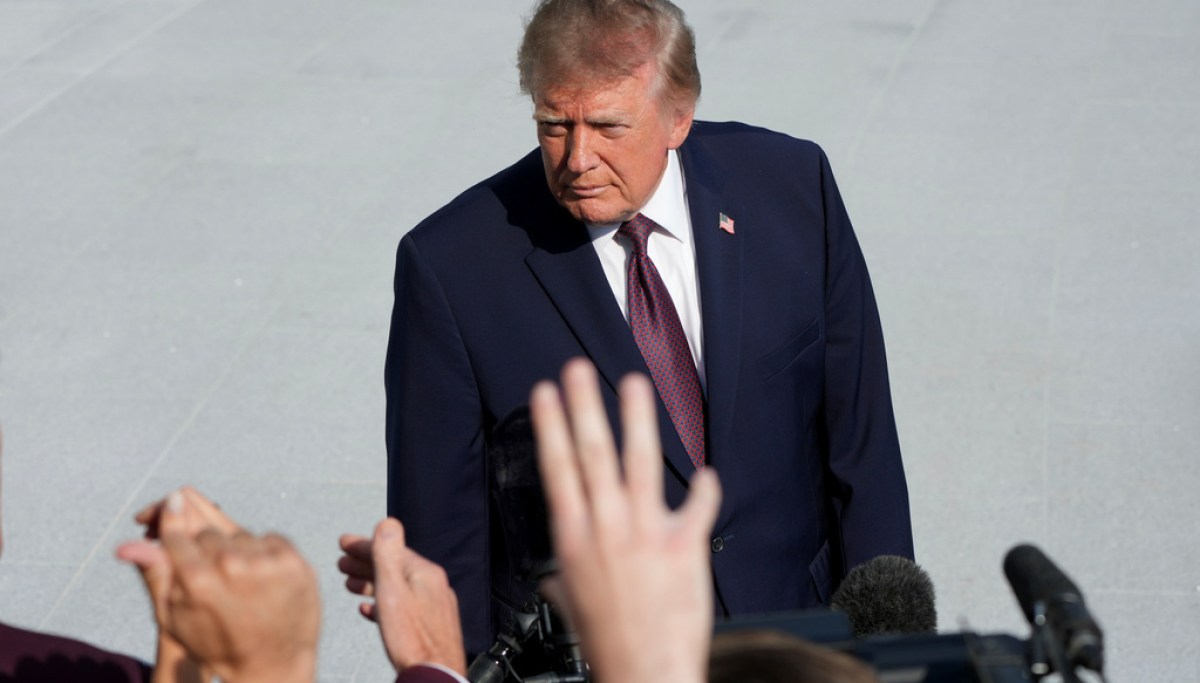
Cover image from washingtonexaminer.com, which was analyzed for this article
A circuit court ruled Virginia's Democrat-drawn congressional map unconstitutional, potentially flipping seats and fueling national gerrymandering fights. Trump criticized the self-own, while parties maneuver ahead of midterms. Voters may decide on reforms amid GOP gains.
PoliticalOS
Thursday, April 23, 2026 — Politics
A Virginia court has halted implementation of a voter-approved map that would have dramatically expanded Democratic congressional seats, illustrating how litigation now shadows every move in the mid-decade redistricting battles both parties have escalated. While projections differ, nonpartisan analyses suggest Republicans may still hold a narrow national edge heading into 2026 despite losses in Virginia and California. The single most important reality is that legal rulings, not just voter referendums, will ultimately decide which maps stand, leaving the fight for House control fluid and the long-term health of electoral competition in doubt.
What outlets missed
Most outlets framed the Virginia referendum either as a settled Democratic win or a Trump-induced Republican self-own, but downplayed or omitted the immediate circuit court ruling that blocked certification and declared key aspects unconstitutional on procedural grounds, a development reported by CNBC and Ballotpedia within 24 hours of the vote. Few noted the amendment's conditional language limiting its effect to the current decade only if other states acted first, or the 48% turnout figure that made the 51.5-48.5 margin less decisive than headlines suggested. Nonpartisan projections from NPR, Cook Political Report and the Princeton Gerrymandering Project showing possible net Republican House gains of three to six seats nationally despite Virginia and California moves were rarely integrated, leaving readers without the full national math. The pending U.S. Supreme Court Voting Rights Act case that could prompt additional Southern map changes before midterms received inconsistent attention, as did the fact that Virginia's pre-referendum 6-5 Democratic edge already reflected earlier court interventions rather than neutral lines.
A Virginia circuit court has blocked a narrowly approved voter measure to redraw the state's congressional districts in favor of Democrats, leaving both parties' calculations for the 2026 midterms unsettled and intensifying a national fight over mid-decade map changes. The ruling, issued one day after the April 21 referendum passed 51.5% to 48.5% according to NBC News tallies, halts certification on constitutional and procedural grounds; the state attorney general immediately appealed to the Virginia Supreme Court. At stake is a potential shift in Virginia's 11-seat delegation from its current 6-5 Democratic edge to as many as 9 or 10 Democratic seats, per analyses from the Princeton Gerrymandering Project and Sabato's Crystal Ball at the University of Virginia.
The referendum asked voters to let the Democrat-led legislature bypass a bipartisan commission and draw new lines this cycle. It was framed by supporters as a necessary response to Republican map changes elsewhere. Opponents called it a partisan power grab that would dilute rural voices. Turnout reached roughly 48%, lower than the 2024 presidential election, with urban areas around Richmond, Virginia Beach and Northern Virginia driving the yes vote while many independents expressed discomfort in pre-election polling reported by the Virginia Public Access Project. The court intervention adds another layer of legal uncertainty to a process already roiled by litigation in multiple states.
This Virginia episode sits inside a larger wave of unusual mid-decade redistricting triggered last summer when then-President Trump urged Texas Republicans to redraw their maps. Texas lawmakers passed changes projected to net the GOP up to five additional House seats, according to the Texas Tribune and nonpartisan trackers, though a separate federal court challenge lingered. Democrats answered with voter-approved adjustments in California expected to add five Democratic seats and parallel moves in other states. NPR and Cook Political Report projections from late 2025 and early 2026 suggested Republicans could still emerge with a net national gain of three to six seats even after Virginia and California countered, though those forecasts assumed stable voter patterns and did not fully incorporate later court rulings.
Reactions split sharply along partisan lines. Trump posted on Truth Social that the Virginia vote was "rigged," without offering evidence, as noted across outlets including Al Jazeera. House Minority Leader Hakeem Jeffries called the outcome a direct response to Republican initiation of the fights and warned Florida Republicans against their own redraw, promising "maximum warfare" if they proceeded. Florida Governor Ron DeSantis responded by inviting Jeffries to campaign in the state, arguing that Democratic involvement would backfire with voters; Florida's legislature is scheduled to consider adding up to five Republican-leaning districts in a special session. Republican lawmakers in Congress offered a mix of blunt regret and defiance: Rep. Don Bacon of Nebraska told Axios the strategy had been a "mistake in hindsight" because it failed to anticipate counter-moves, while House Speaker Mike Johnson expressed confidence that further changes in Florida would hold.
Legal experts say the Virginia Supreme Court appeal could be resolved within weeks, but a pending U.S. Supreme Court case on the Voting Rights Act could trigger still more map changes in Southern states before November. Samuel Wang of the Princeton Gerrymandering Project told multiple outlets that the flurry of mid-decade activity, only the fourth such spike in 50 years, reduces competition and hands mapmakers rather than voters the decisive power. Both parties have accused the other of starting the cycle; few have called for the independent commissions that exist in a handful of states to become the national standard.
The central tension remains unresolved: whether aggressive partisan map-drawing produces durable majorities or simply invites endless litigation and voter cynicism that ultimately erodes trust in the system. Virginia's current maps were themselves products of earlier court-approved processes. If the state Supreme Court upholds the lower court's block, the 6-5 split holds for 2026. If it reverses, new lines could be drawn quickly. Similar uncertainty clouds Texas, Florida and the handful of other states still in play. Readers tracking the House battle will see these map fights cited repeatedly as both sides attempt to convert procedural wins into November votes on the economy, foreign policy and Trump's agenda.
More in Politics

Federal Agents Search Omar Home in Ongoing Immigration Probe
Homeland Security agents searched the Minnesota Democrat's DC residence in a criminal probe, prompting accusations of political intimidation from Omar and Democratic leaders. Coverage spans left-leaning outlets like NPR, BBC, and The Guardian alongside right-leaning criticism from The Federalist and Daily Wire.

Trump Diesel Import Plan Draws Pushback Over Russia Ties
The weekend agreement drew bipartisan congressional pushback and criticism from Ukraine's Zelenskyy, with analysts downplaying US fuel price impacts. Right-leaning outlets like National Review, Dispatch, and Washington Examiner questioned its legality and effectiveness.

Independents Test Voter Appetite for Middle Ground in 2026 Midterms
Nearly 200 independents are running in competitive races as voters weigh ballot measures on housing costs in states like Massachusetts. Left-leaning coverage from NYT, NPR, and Guardian highlights turnout and key races while right outlets focus on GOP strategy.
Trump Rallies in Alaska, Ohio to Bolster GOP Senate Candidates
The president rallied in Wasilla for Sen. Dan Sullivan and faced empty seats at an Ohio event amid midterm concerns. Outlets across the spectrum covered the trips as signals of GOP vulnerability weeks before Election Day.
The Compass
You just read five takes on one story.
What's your take? Find your political shape in a few minutes.
Take the test