
YouTube Lets Users Prompt AI for Custom Homepage Feeds
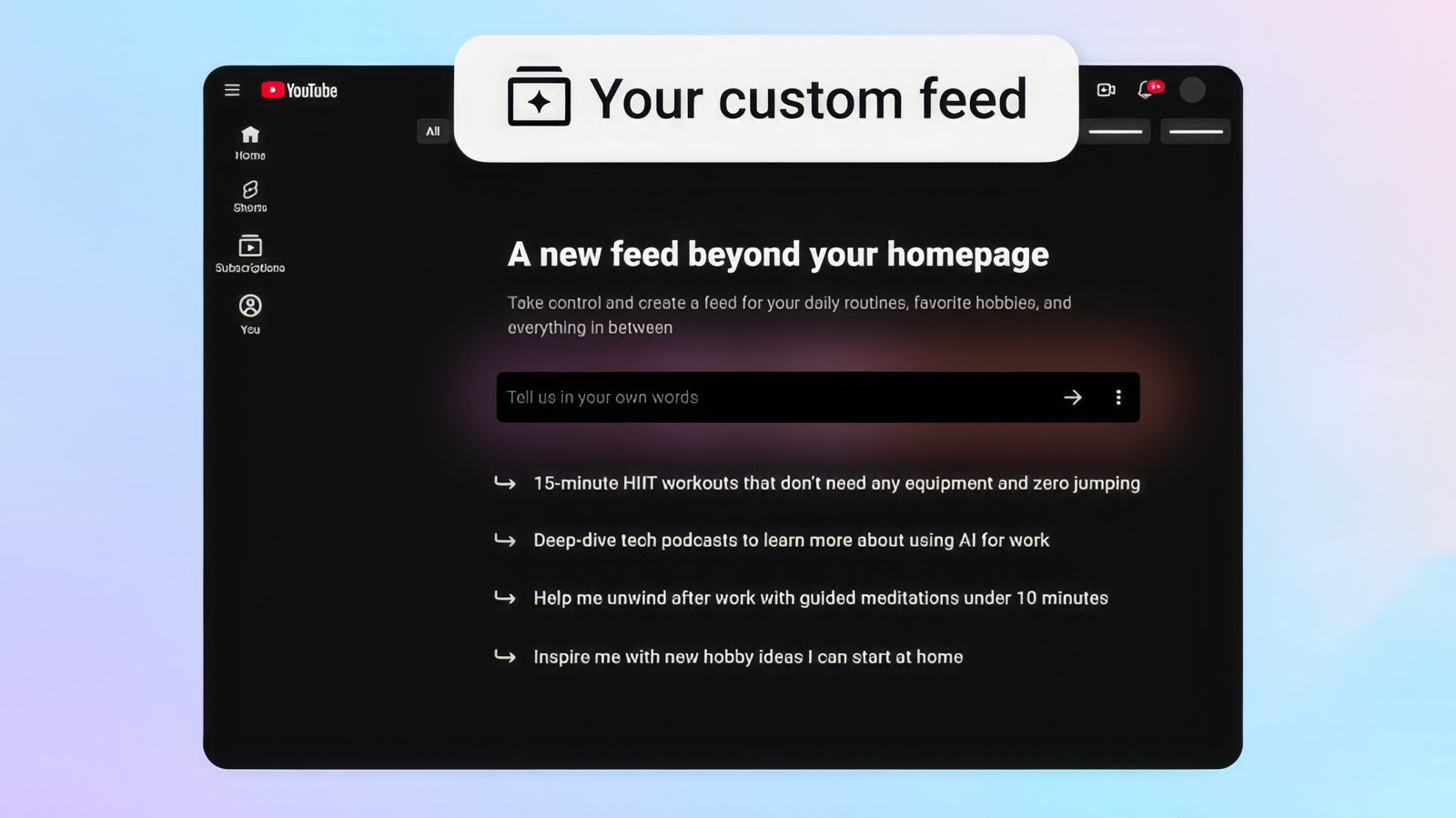
Cover image from engadget.com, which was analyzed for this article
YouTube introduced tools allowing users to generate custom video feeds via AI prompts, expanding algorithmic content discovery features.
PoliticalOS
Thursday, May 28, 2026 — Tech
The feature expands user input into YouTube’s homepage algorithm through natural-language prompts but remains limited to U.S. English users with history tracking enabled. Its long-term effect on content discovery depends on factors that have not yet been measured or disclosed.
What outlets missed
Neither report examined whether the new feeds alter data collection practices or surface previously down-ranked videos. No outlet tested prompt consistency across repeated uses or compared output quality against the standard homepage algorithm. Independent user feedback on edge cases, such as prompts involving niche or controversial topics, also remained outside the initial coverage.
YouTube Launches AI Tool Allowing Users to Shape Their Own Video Feeds
YouTube has introduced a new feature that lets users generate personalized video feeds through simple text prompts, marking another step in how private platforms respond to demands for greater individual control over content consumption. The tool, called Your custom feed, enables signed-in viewers to describe desired videos based on interests, moods, or routines, with the AI then curating a selection that can be pinned to the top of the homepage for easy access.
The rollout is limited for now to English-language users in the United States on both the mobile app and desktop versions. To activate it, individuals click the designated tab and enter a prompt, such as requests for short guided meditations or in-depth podcasts on artificial intelligence applications. Prompts remain editable, allowing adjustments that produce fresh results without starting over. Account settings must have search and watch history enabled for the tab to appear, and users can flag unsatisfactory outputs through a feedback option in the menu.
This capability builds on earlier platform experiments with algorithmic tweaks. Spotify introduced a similar prompt-based system for playlists earlier in the year, while Instagram adjusted its Reels recommendations using topic selections rather than open descriptions. YouTube's approach follows its own recent efforts to identify AI-generated videos, illustrating how companies adapt tools to maintain user engagement amid shifting preferences.
From a perspective that values market-driven solutions over centralized mandates, the development highlights how competition among technology firms pushes innovation toward greater user autonomy. Individuals, rather than distant engineers or regulators, gain direct input into what appears in their feeds, sidestepping the limitations of one-size-fits-all algorithms that often reflect institutional priorities. Such features reduce friction for those seeking specific content while preserving the voluntary nature of platform participation, where feedback mechanisms and the ability to switch services serve as built-in checks.
Critics of expansive government oversight might note that these adjustments arise organically from profit incentives to retain viewers, not from external edicts. History shows that attempts to impose top-down content rules frequently overlook the dispersed knowledge individuals hold about their own tastes. Here, the prompt system delegates curation closer to the end user, aligning with empirical patterns where personal responsibility and choice outperform bureaucratic alternatives in delivering relevant outcomes.
Availability depends on basic account configurations, underscoring that participation remains optional and tied to existing data practices users already control. As the feature expands, its success will likely hinge on how effectively it matches real viewer needs without introducing new layers of complexity. In a landscape of rapid technological change, this kind of incremental empowerment through private enterprise offers a practical alternative to narratives demanding heavier intervention.
You just read Conservative's take. Want to read what actually happened?
More in Technology
Trump Pushes Community Dividends to Ease Data Center Backlash
Trump suggested tech companies pay local communities a 'dividend' to gain support for massive AI data centers amid growing backlash over energy use and infrastructure.
Musk Pledges One SpaceX Share to Every U.S. Child
Musk announced plans to distribute one SpaceX share to each of roughly 73 million American children next year, drawing praise from Trump and signaling closer alignment between the two.

Trump Administration Bans DeepSeek AI From Federal Civilian Agencies
Tech stocks rebounded on AI optimism while hyperscalers and firms navigate data center infrastructure, earnings focus, and regulatory scrutiny including bans on certain Chinese AI tools.

Musk Says He Will Give One SpaceX Share to Every US Child
Elon Musk announced plans to distribute one SpaceX share to every American child in 2027, with hints of further giveaways. The pledge drew coverage across outlets amid broader discussions of AI philanthropy and Musk entities.
The Compass
You just read five takes on one story.
What's your take? Find your political shape in a few minutes.
Take the test