
YouTube Lets Users Prompt AI for Custom Homepage Feeds
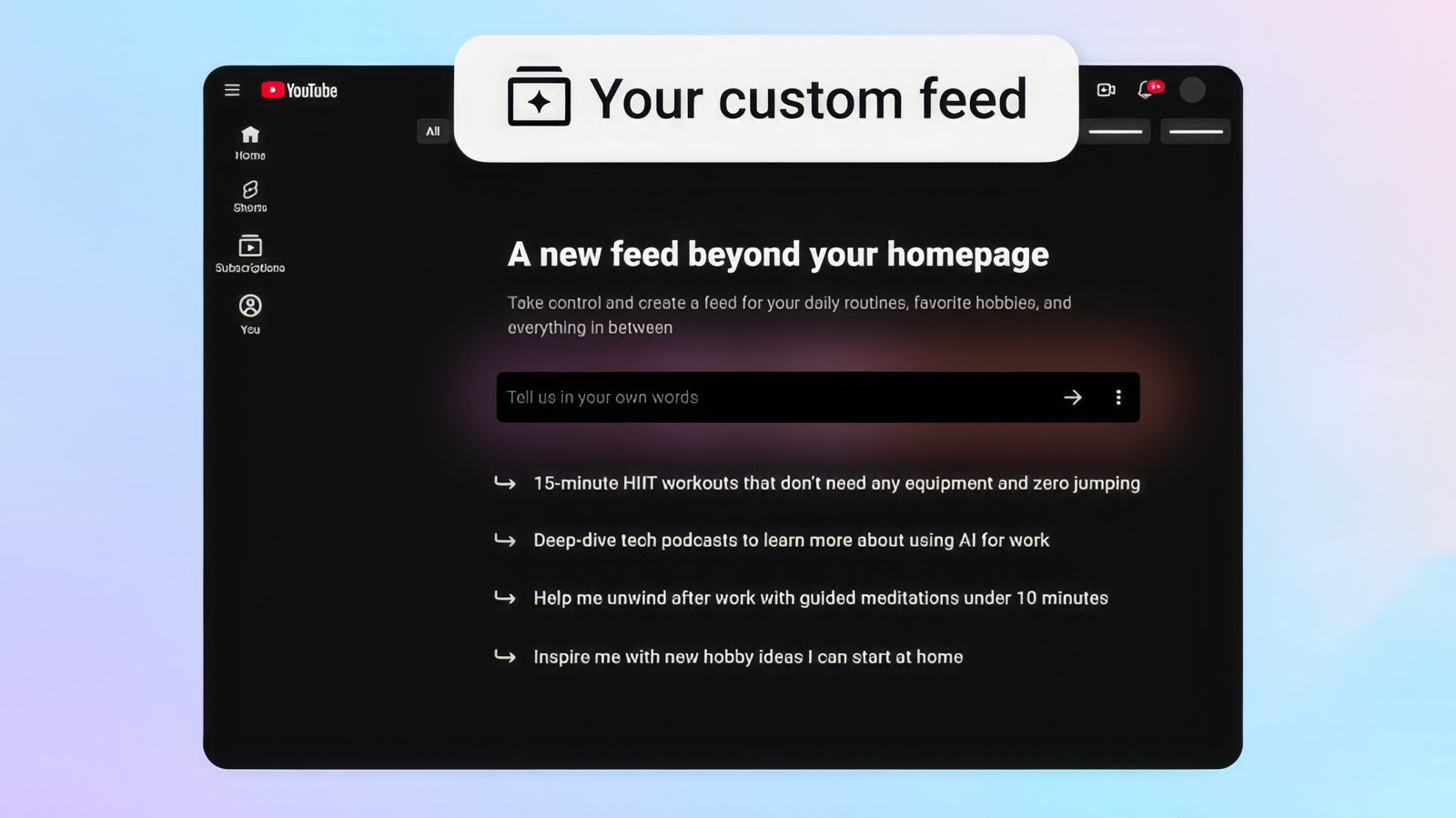
Cover image from engadget.com, which was analyzed for this article
YouTube introduced tools allowing users to generate custom video feeds via AI prompts, expanding algorithmic content discovery features.
PoliticalOS
Thursday, May 28, 2026 — Tech
The feature expands user input into YouTube’s homepage algorithm through natural-language prompts but remains limited to U.S. English users with history tracking enabled. Its long-term effect on content discovery depends on factors that have not yet been measured or disclosed.
What outlets missed
Neither report examined whether the new feeds alter data collection practices or surface previously down-ranked videos. No outlet tested prompt consistency across repeated uses or compared output quality against the standard homepage algorithm. Independent user feedback on edge cases, such as prompts involving niche or controversial topics, also remained outside the initial coverage.
YouTube Pushes AI to Take Over User Video Choices
YouTube has introduced a new tool that lets users describe what they want to watch and have artificial intelligence build a custom feed around it. The feature, called Your custom feed, is rolling out first to signed-in users in the United States on both mobile and desktop in English. Once activated, the feed can be pinned to the top of the homepage for quick access.
The system works through simple text prompts. Users type requests such as guided meditations under ten minutes or deep-dive tech podcasts about artificial intelligence. YouTube then assembles a selection of videos meant to match those instructions. Prompts can be changed later to create an entirely new feed. The company says the tool gives people more direct influence over what appears on their homepage, yet it still depends on the same recommendation systems that have shaped YouTube viewing for years.
To see the feature, users must keep search and watch history turned on in their account settings. Without that data, the option does not appear. This requirement means viewers who want the convenience must continue feeding the platform detailed records of their activity. Past controversies over how YouTube and its parent company Google handle that data make the condition worth noting.
The move follows similar experiments elsewhere. Spotify already offers prompted playlists for music and podcasts. Instagram has given users topic-based controls over its Reels feed. YouTube is simply applying the same prompt-based approach to video. The company also recently began labeling some AI-generated content, a step presented as transparency. Yet both actions expand the role of automated systems in deciding what reaches audiences.
Critics have long argued that platforms like YouTube already exert enormous power through opaque algorithms. Shifting some of that power to user-written prompts does not remove the underlying infrastructure. The AI still draws from existing videos, trends, and engagement signals. A poorly worded prompt or an incomplete training set could easily produce results that feel off or repetitive. YouTube has added a feedback option for users to report problems, but that process routes complaints back to the same company managing the system.
Broader questions remain about how much real choice this adds. Viewers who dislike the mainstream recommendations can now describe their tastes in natural language, yet they are still operating inside an environment controlled by one of the largest technology firms. The feature does nothing to address concerns about selective promotion of certain viewpoints or the suppression of others, issues that have surfaced repeatedly in congressional hearings and public complaints.
For now the tool is limited to English-language prompts in the United States. Expansion to other languages and regions will likely follow if early adoption meets internal targets. In the meantime, users interested in testing it must weigh the trade-off between a potentially convenient feed and the continued collection of their viewing data. Whether the new option reduces or simply repackages algorithmic influence is a question that will play out as more people try it.
You just read America First's take. Want to read what actually happened?
More in Technology
Trump Pushes Community Dividends to Ease Data Center Backlash
Trump suggested tech companies pay local communities a 'dividend' to gain support for massive AI data centers amid growing backlash over energy use and infrastructure.
Musk Pledges One SpaceX Share to Every U.S. Child
Musk announced plans to distribute one SpaceX share to each of roughly 73 million American children next year, drawing praise from Trump and signaling closer alignment between the two.

Trump Administration Bans DeepSeek AI From Federal Civilian Agencies
Tech stocks rebounded on AI optimism while hyperscalers and firms navigate data center infrastructure, earnings focus, and regulatory scrutiny including bans on certain Chinese AI tools.

Musk Says He Will Give One SpaceX Share to Every US Child
Elon Musk announced plans to distribute one SpaceX share to every American child in 2027, with hints of further giveaways. The pledge drew coverage across outlets amid broader discussions of AI philanthropy and Musk entities.
The Compass
You just read five takes on one story.
What's your take? Find your political shape in a few minutes.
Take the test