
Mamdani's Equity Agenda Ignites NYC's Ideological Divide

Cover image from nypost.com, which was analyzed for this article
Progressive Zohran Mamdani earns left-wing acclaim for kindness and equity push in NYC mayor race. Right critiques his plans as expansive government overreach and phony comparisons to past mayors. Campaign underscores urban ideological clashes.
PoliticalOS
Monday, April 27, 2026 — Politics
Zohran Mamdani's mayoralty has crystallized a deep divide over how to fix New York City's affordability crisis. His voter-mandated racial equity plan uses a high local cost-of-living threshold to justify broad government action, winning praise for confronting disparities and criticism for avoiding root causes such as housing construction barriers. Readers should watch whether the combination of visible outreach, enforcement and sustainability investments produces measurable relief on rents, repairs and opportunity, or whether fiscal, regulatory and political constraints limit results.
What outlets missed
Most coverage omitted that the racial equity plan was required by 2022 voter-approved ballot measures, framing it instead as Mamdani's personal initiative. The document's full scale, 375 pages drawing on historical patterns of disinvestment with input from 45 agencies, received little detail outside official releases and one neutral report. NYPD operational deployments, including a Winter Violence Reduction Plan that added 1,800 officers, were downplayed in favor of crediting or criticizing the mayor's personal outreach for crime declines. Early concrete actions such as the Office of Deed Theft Prevention, a $4.5 million green jobs pilot and opening of seven early childhood centers appeared only sporadically. Finally, many vivid anecdotes, from specific community events on the left to inspection videos on the right, remained uncorroborated by cross-outlet reporting or primary records.
New Yorkers facing rents that consume half their income and daily commutes that stretch into hours now confront a mayor who says the system itself must change. In his first weeks, Zohran Mamdani released a 375-page Preliminary Citywide Racial Equity Plan that declares 62 percent of city residents cannot meet a "true cost of living" calculated at roughly $160,000 annually for a family with children. The figure stands in stark contrast to the federal poverty line near $35,000. The plan, which coordinates 45 agencies and lists more than 800 strategies and 600 indicators across seven domains, traces current disparities to decades of disinvestment, redlining and unequal access to services. It did not arrive in a vacuum. New York City voters approved ballot measures in 2022 requiring citywide racial equity planning.
That mandate sits at the center of the tension. Supporters view the document as a data-driven effort to address root causes. Manhattan Institute policy analyst Santiago Vidal Calvo called the revised threshold "moving the goalposts" in an interview with Fox News Digital. "Anybody under $160,000 with children cannot afford to live in New York City," he said, arguing the approach justifies bureaucratic expansion instead of tackling housing supply, zoning reform and permitting delays. The Justice Department under President Trump signaled it would review the plan's conclusions on race and government remedies. Mamdani's office did not provide comment when reached by Fox.
At the same time, the mayor has pursued a highly visible style of retail politics. He has walked neighborhood streets, joined city workers on night shifts, read to schoolchildren and attended events across boroughs that include neighborhoods that voted for Trump in 2024. Outlets on the left tie these efforts to the Surgeon General's 2023 advisory on loneliness, which found half of American adults reporting isolation and linked weak social ties to health harms equivalent to smoking 15 cigarettes daily. Specific anecdotes, including singing "The Wheels on the Bus" alongside Ms. Rachel and former President Obama or greeting mascot characters at Citi Field, appeared in one profile but could not be independently verified in contemporaneous news reports or official schedules.
Mamdani has repeatedly invoked Fiorello La Guardia, the Depression-era mayor who unified the subways, battled corruption and delivered New Deal-scale infrastructure. In an April 2026 WNYC interview marking his first 100 days, Mamdani quoted La Guardia's line that fighting existing evils is radical and said the example remains "truly inspiring." Political consultants offered mixed reactions. Several noted La Guardia operated as a Republican with socialist roots, clashed with unions at times and benefited from alignment with President Franklin Roosevelt during a national crisis. One strategist told the New York Post that after only 100 days, "there's not much comparison." Others pointed out every modern mayor has claimed La Guardia's mantle; the gap between rhetoric and execution remains the test.
Housing policy has sharpened the debate further. Mamdani's administration announced a $2.5 billion NYCHA sustainability agenda on Earth Day that includes heat pumps, induction stoves, solar panels and green jobs training for public housing residents. NYCHA repair times average more than 400 days for routine work; mold, leaks and elevator failures remain chronic. The mayor has also joined Housing Preservation and Development inspectors on enforcement visits to private buildings, resulting in violation notices that critics call trivial. Reports of a specific video showing inspectors citing a flowerpot on a fire escape and a cracked plaster wall in an otherwise clean apartment could not be corroborated by other outlets. Data from city dashboards show rent-stabilized buildings carry higher rates of hazardous violations, though causation, whether from under-maintenance or aggressive enforcement, remains contested. A resident quoted criticizing green upgrades in favor of basic repairs appeared only in one conservative account and was not corroborated elsewhere.
Violent crime has declined in the opening months of Mamdani's term. The New York Police Department attributed gains to targeted operations that deployed additional officers; one profile credited the mayor's community presence instead. Neither explanation has been isolated as the sole factor. On the ideological fringe, the Revolutionary Communists of America, a small Trotskyist group, used social media and local events to urge Mamdani to abandon the Democratic Party and help form a national workers' party. The group praised his tax-the-rich platform and support for universal childcare and free buses but called his approach insufficient without a full break from the two-party system. Its claimed 83 percent membership growth since mid-2025 could not be independently verified; the organization represents a few hundred members nationwide at most.
The cumulative picture is one of unresolved contradiction. Mamdani inherited a multi-billion-dollar budget gap, an uneasy relationship with Governor Kathy Hochul and the external pressure of a Trump administration skeptical of urban progressive experiments. His equity plan carries the force of voter directive yet invites charges of redefining problems to fit preferred solutions. His personal accessibility resonates with voters hungry for connection yet draws accusations of grandstanding. Whether the combination produces measurable relief on rents, transit reliability and neighborhood safety, or whether it enlarges administrative structures without addressing supply constraints, will shape the city's trajectory long after the first 100 days.
More in Politics

Federal Agents Search Omar Home in Ongoing Immigration Probe
Homeland Security agents searched the Minnesota Democrat's DC residence in a criminal probe, prompting accusations of political intimidation from Omar and Democratic leaders. Coverage spans left-leaning outlets like NPR, BBC, and The Guardian alongside right-leaning criticism from The Federalist and Daily Wire.

Trump Diesel Import Plan Draws Pushback Over Russia Ties
The weekend agreement drew bipartisan congressional pushback and criticism from Ukraine's Zelenskyy, with analysts downplaying US fuel price impacts. Right-leaning outlets like National Review, Dispatch, and Washington Examiner questioned its legality and effectiveness.

Independents Test Voter Appetite for Middle Ground in 2026 Midterms
Nearly 200 independents are running in competitive races as voters weigh ballot measures on housing costs in states like Massachusetts. Left-leaning coverage from NYT, NPR, and Guardian highlights turnout and key races while right outlets focus on GOP strategy.
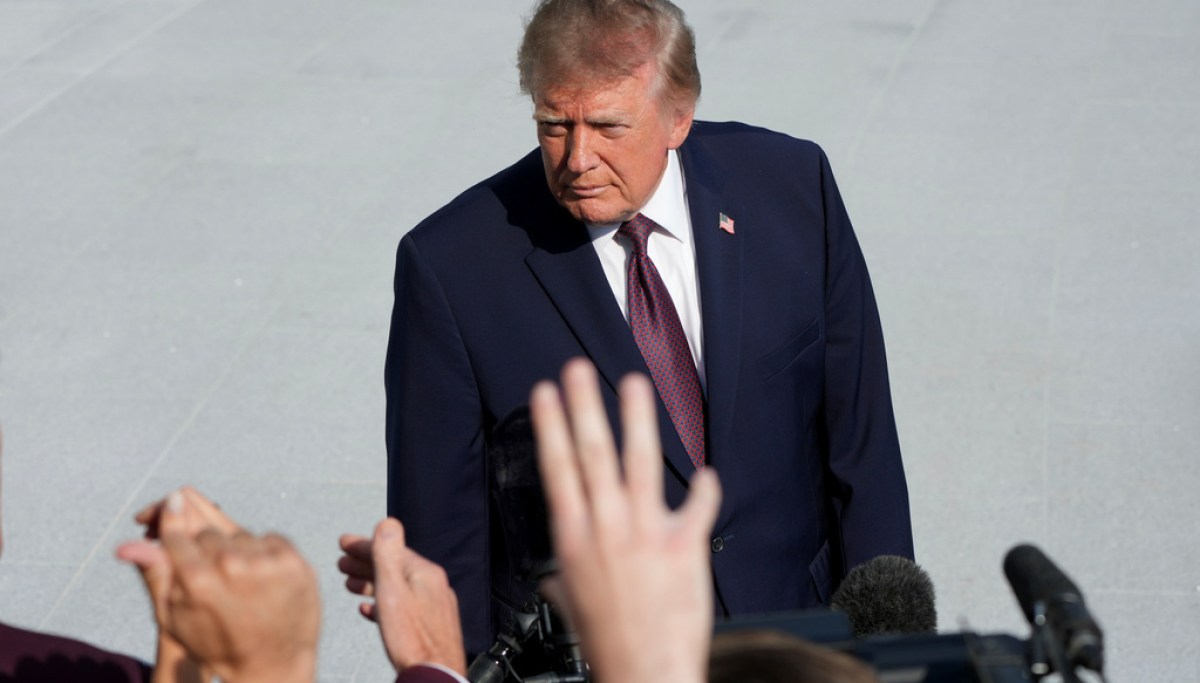
Trump Rallies in Alaska, Ohio to Bolster GOP Senate Candidates
The president rallied in Wasilla for Sen. Dan Sullivan and faced empty seats at an Ohio event amid midterm concerns. Outlets across the spectrum covered the trips as signals of GOP vulnerability weeks before Election Day.
The Compass
You just read five takes on one story.
What's your take? Find your political shape in a few minutes.
Take the test